12 Beautiful Bedroom Layouts With a Window Behind the Bed
Bedroom layouts with a window behind the bed can feel like a puzzle. You worry about a draft on your neck, morning glare on your pillow, and whether the room will ever get dark enough at night.
You may also have heard that sleeping under a window is bad feng shui. If that tradition matters to you, a solid headboard and curtains that close fully at night give you the same sense of shelter.
Here’s the good news. A window behind the bed can be the best feature in the room. With the right bed height, the right window treatment and a little measuring, it frames your bed like a picture instead of fighting it.
Every layout below comes with a simple top-view floor plan, so you can see exactly where the bed, window and furniture go.
Before You Put the Bed Under a Window
- Keep the window usable. Building codes generally require bedrooms to have an emergency escape opening, and that’s often the window, so never block it completely with built-ins or heavy furniture.
- Choose cordless window treatments. Loose blind and shade cords near a bed are a strangulation risk for young children.
- Stop drafts at the source. Weatherstripping and thermal-lined curtains do more than simply moving the bed away from the glass.
- Measure the sill height first. Almost every layout below starts with the distance from the floor to the bottom of the window.
How to Read the Layout Maps
Each layout includes a Bedroom Blueprint with Room Size, Budget Tier, Calm Score and a top-view Layout Map. On every map, the wall behind the bed is always the top strip, and the key feature of that layout is highlighted.
1. The Wall-to-Wall Floor-to-Ceiling Drapery Backdrop
Room Size
Budget Tier
$$ $200 to $800
Calm Score
5 out of 5
One soft, unbroken wall of fabric is about as calm as a bedroom gets.
Layout Map: Top View
The Concept
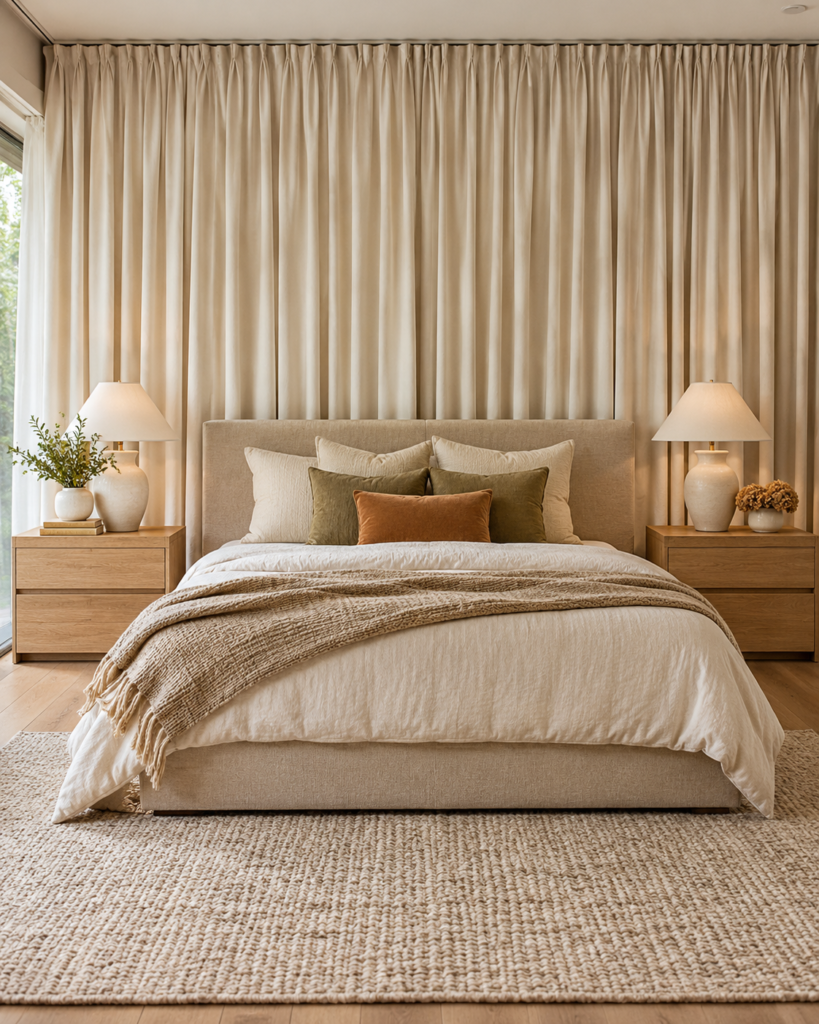
Run floor-to-ceiling curtains across the entire headboard wall, not just across the window. When the drapes are closed, the window disappears and the whole wall becomes a soft fabric backdrop behind the bed.
Why It Works
- It hides an awkward or off-center window completely, so the bed always looks centered.
- One long run of fabric reads as a calm, finished wall, in photos and in person.
- Closed drapes help block light and soften the chill coming off the glass.
Designer’s Practical Fix
- Use a ceiling-mounted track with ripple-fold or pinch-pleat panels that run from corner to corner.
- Plan for fabric about 2 to 2.5 times the width of the wall so the folds look full.
- Pull the bed 4 to 6 inches away from the wall so the curtains can slide freely behind the headboard.
- Add a blackout or thermal lining to the panels that cover the glass.
2. The Low-Profile Platform Bed Under a Picture Window
Room Size
Budget Tier
$$ $200 to $800
Calm Score
5 out of 5
Clean, low lines that keep the view wide open.
Layout Map: Top View
The Concept
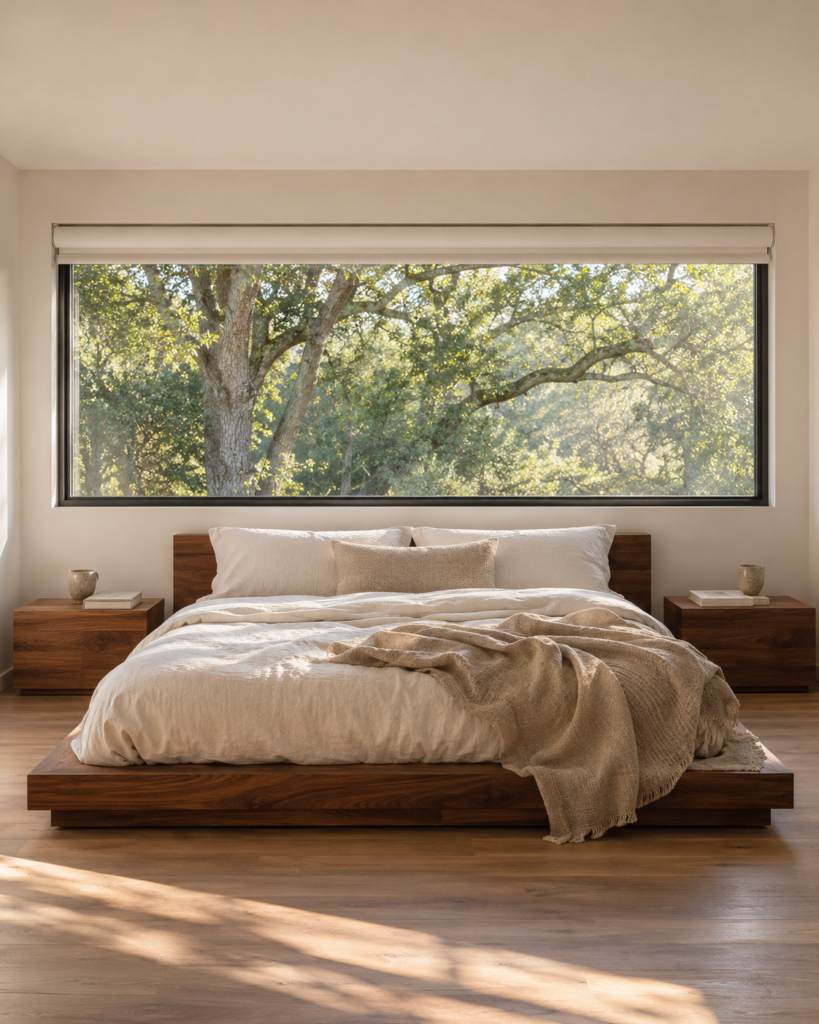
A low platform bed sits comfortably under a wide picture window without covering the glass. With the mattress well below the sill, the window frames the bed like a piece of art.
Why It Works
- You keep all of the daylight and the view.
- A low bed makes the window look taller and the room feel bigger.
- There’s no tall headboard competing with the window for attention.
Designer’s Practical Fix
- Keep the top of the mattress and any headboard at least 4 to 6 inches below the sill.
- Choose a frame around 8 to 14 inches high, or skip the headboard and lean a few firm pillows against the wall.
- Use an inside-mount blackout roller or roman shade so nothing hangs down over the bed.
- Leave a 2 to 3 inch gap between the bed and the wall, so you can still reach the window and any heater or vent under it stays clear.
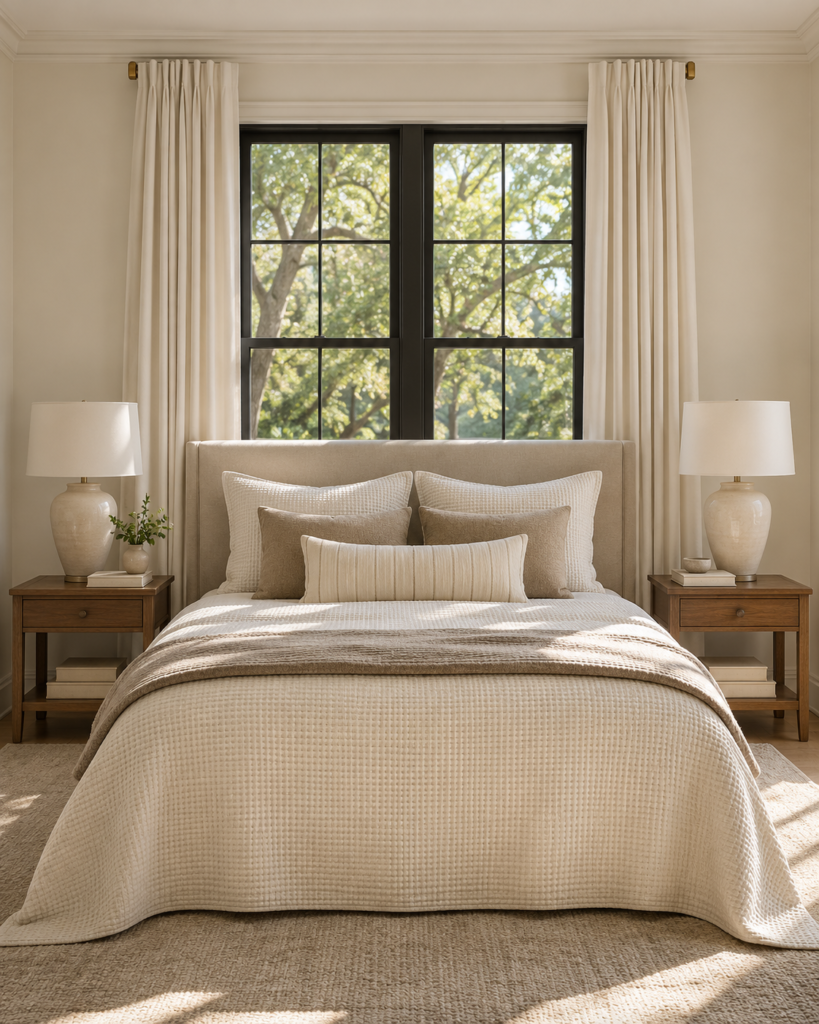
3. Symmetrical Centered Window with Flanking Nightstands
Room Size
Budget Tier
$$ $200 to $800
Calm Score
5 out of 5
Balanced and orderly, with everything lined up.
Layout Map: Top View
The Concept
When the window sits right in the middle of the wall, center the bed under it and place matching nightstands and lamps on both sides. It’s the classic hotel look, and it works because everything lines up.
Why It Works
- Symmetry feels orderly and restful.
- The window becomes a natural frame above the headboard.
- Matching lamps give both sides of the bed the same light.
Designer’s Practical Fix
- Line up the center of the bed with the center of the window, measuring from each wall corner.
- Choose nightstands within about 2 inches of your mattress height.
- Hang curtain panels just outside the window frame so they stack beside the glass, not over it, when open.
- Use two matching table lamps at the same height to finish the look.
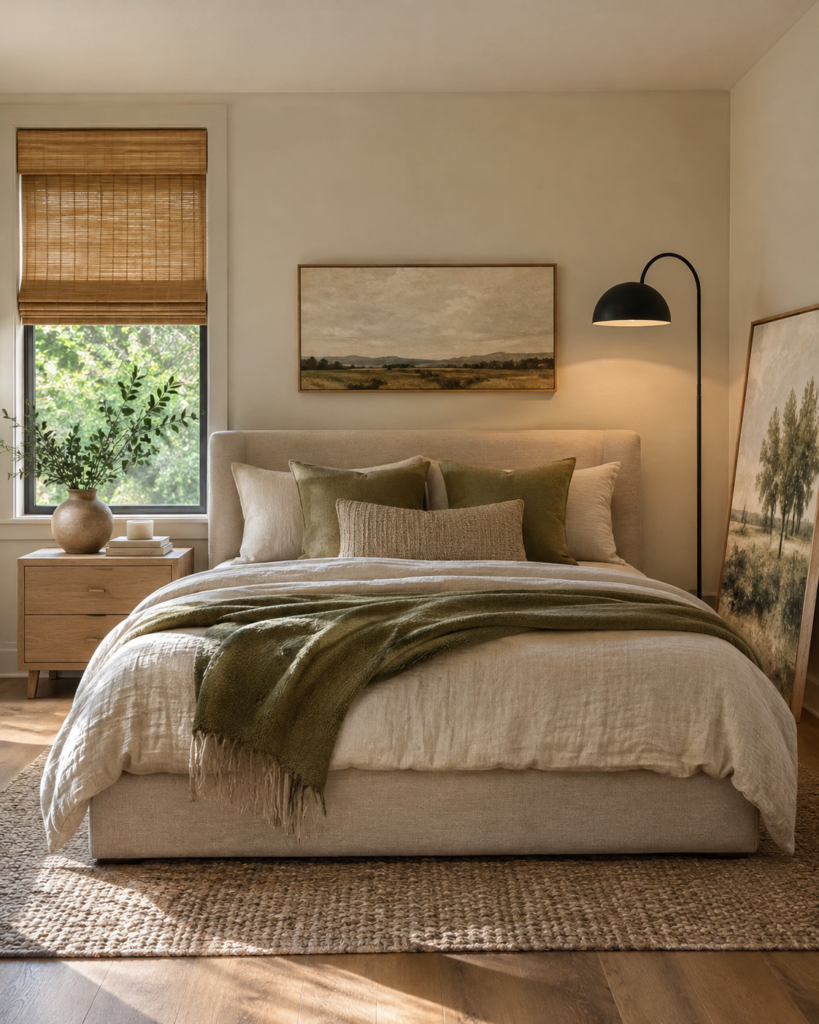
4. The Balanced Asymmetric Off-Center Window Layout
Room Size
Budget Tier
$ Under $200
Calm Score
4 out of 5
Balanced once it’s styled, though an uneven wall takes a little more thought.
Layout Map: Top View
The Concept
If the window sits off to one side, don’t fight it. Center the bed on the wall, then balance the window side with something tall on the other side, like a floor lamp, a tall plant or a large framed print.
Why It Works
- It looks deliberate instead of awkward.
- The bed stays centered in the room, which makes walking around it easier.
- Balance doesn’t need perfect symmetry, just similar visual weight on both sides.
Designer’s Practical Fix
- Put a low nightstand under the window so it doesn’t block the glass.
- On the opposite side, add something tall, about 5 to 6 feet, like a floor lamp or a plant.
- Hang one curtain rod across the whole wall if you want the window to feel centered when the curtains are closed.
- Keep both sides in the same color family so they read as a pair.
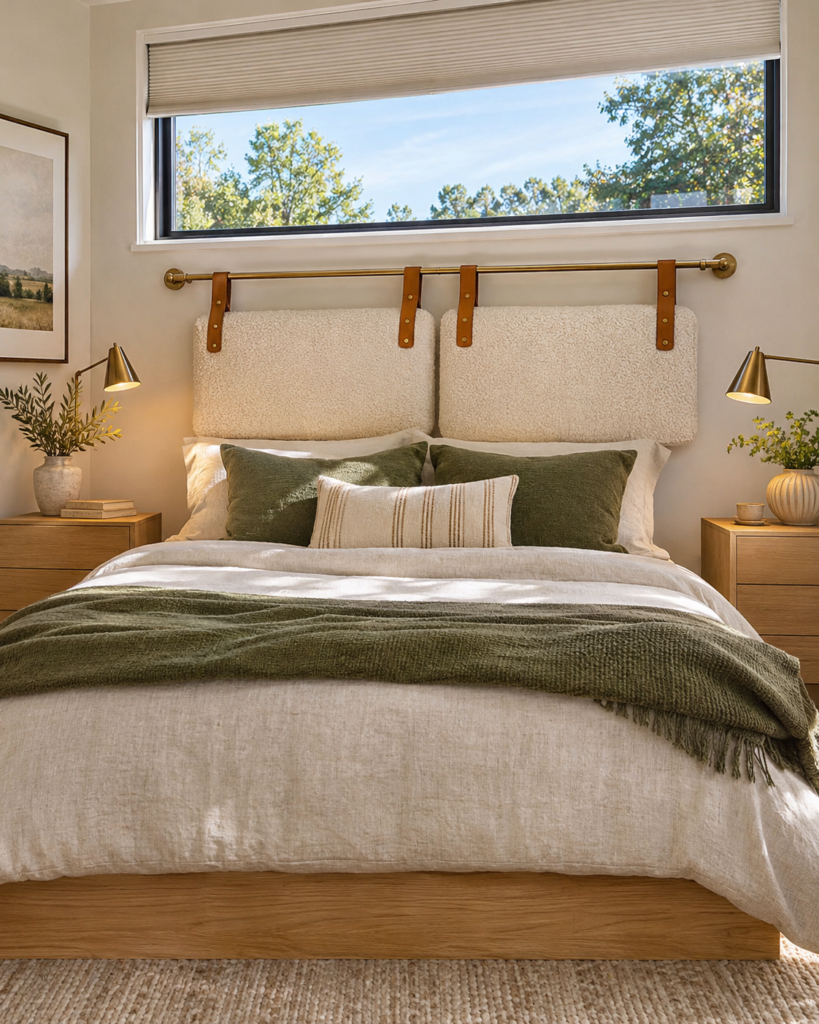
5. Floating Strap-Cushion Headboard Under High Glass
Room Size
Budget Tier
$ Under $200
Calm Score
4 out of 5
Soft and simple, with the window still in full view.
Layout Map: Top View
The Concept
For a window that starts higher up the wall, hang two or three padded cushions from leather or fabric straps on a rail below the sill. You get a soft headboard without blocking the glass above it.
Why It Works
- It adds comfort for reading or sitting up in bed.
- The rail sits below the window, so daylight still pours in.
- Swapping the cushions gives the room a new look in minutes.
Designer’s Practical Fix
- Mount the rail so the top of the cushions sits 2 to 4 inches below the sill.
- Screw the rail into studs or use proper wall anchors, since people lean against it.
- Choose cushions about 3 to 4 inches thick in linen or a durable performance fabric.
- Pair it with an inside-mount cellular shade for privacy and a little insulation.
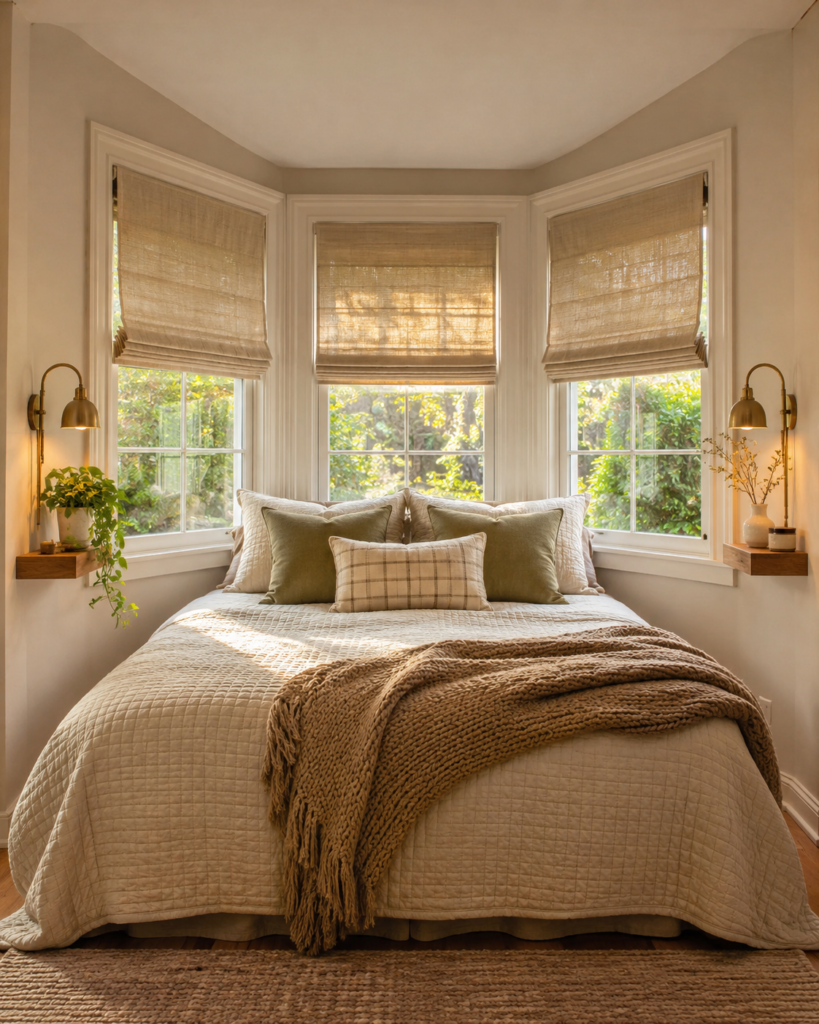
6. The Bay Window Bed Nook Retreat
Room Size
Budget Tier
$$$ Over $800
Calm Score
4 out of 5
Cozy and tucked away, though glass on three sides needs good light control.
Layout Map: Top View
The Concept
If the bay is deep and wide enough, slide the bed right into it to create a cozy nook with windows on three sides. It’s one of the most charming ways to use a bay.
Why It Works
- The bay becomes the focal point instead of wasted space.
- You wake up to light from three directions.
- The rest of the room is freed up for other furniture.
Designer’s Practical Fix
- Measure the inside width and depth of the bay first. A twin mattress is about 38 by 75 inches and a full is about 54 by 75 inches, so leave a little extra room for bedding.
- Use cordless shades on each window section so every pane can close on its own.
- Hang a thermal-lined curtain across the bay opening to close off the nook on cold nights.
- Nightstands rarely fit inside a bay, so mount a small floating shelf on the wall at each side of the opening for a lamp and a book.
- Make sure at least one window still opens easily, so the bed never blocks a way out.
7. The Light-Filtering Open Wood Slat Headboard

Room Size
Budget Tier
$$ $200 to $800
Calm Score
4 out of 5
Warm and open, with daylight still reaching the bed.
Layout Map: Top View
The Concept
An open slatted wood headboard lets light pass through the gaps instead of blocking it. The window stays visible, and the slats add warmth and texture.
Why It Works
- Daylight still reaches the bed.
- Wood slats look modern and warm at the same time.
- You get a real headboard without closing off the window.
Designer’s Practical Fix
- Pick slats with gaps of about 1 to 2 inches.
- Keep the top of the headboard at or just below the sill, so the window still reads as one shape.
- Leave 3 to 4 inches between the headboard and the wall, so light can glow through the slats and the window stays easy to reach.
- Use a light-filtering roman shade for soft daylight, with a blackout liner if you need darkness.
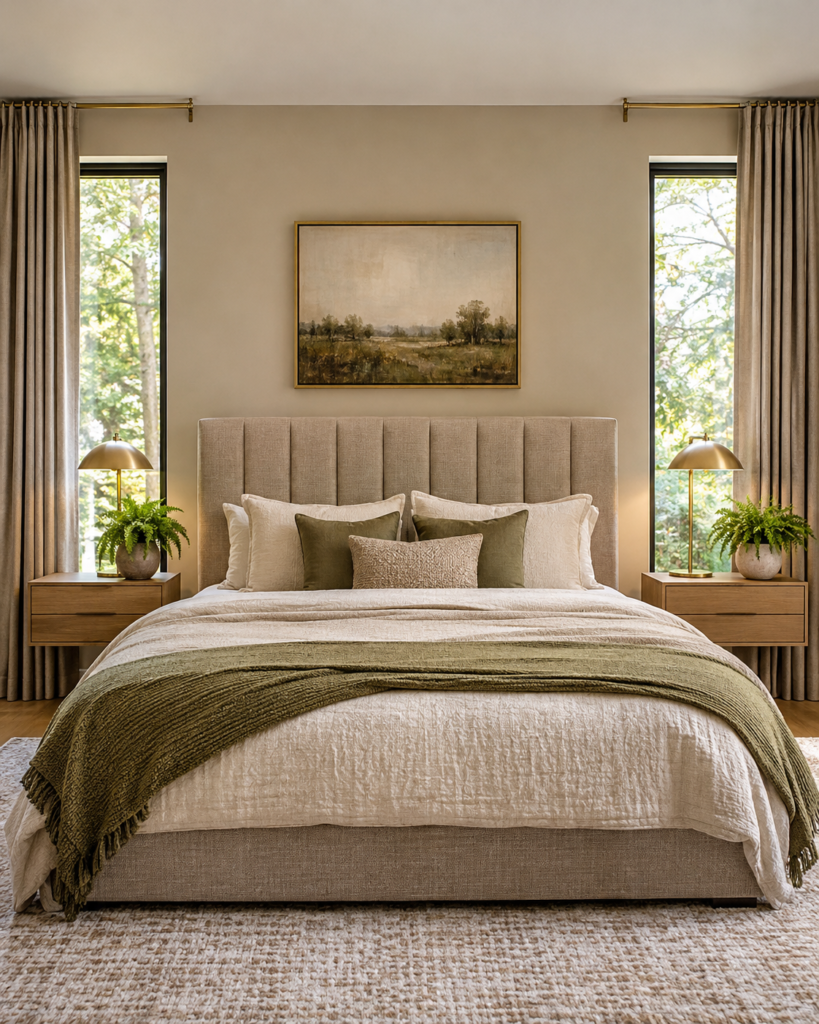
8. Centered Bed Flanked by Twin Vertical Windows
Room Size
Budget Tier
$$ $200 to $800
Calm Score
4 out of 5
Natural symmetry, though two windows means two treatments to manage.
Layout Map: Top View
The Concept
When two tall, narrow windows sit at each end of the wall, center the bed on the solid wall between them and let the windows act like tall bookends.
Why It Works
- The windows create built-in symmetry.
- Each side of the bed gets its own light.
- The solid wall behind the bed is perfect for a statement headboard or art.
Designer’s Practical Fix
- Center the bed on the solid stretch of wall between the windows.
- Place low nightstands in front of each window so they don’t block the glass.
- Use matching shades or panels on both windows so they look like a pair.
- Choose a headboard narrower than the solid wall, leaving at least 4 inches of clear wall before each window frame.
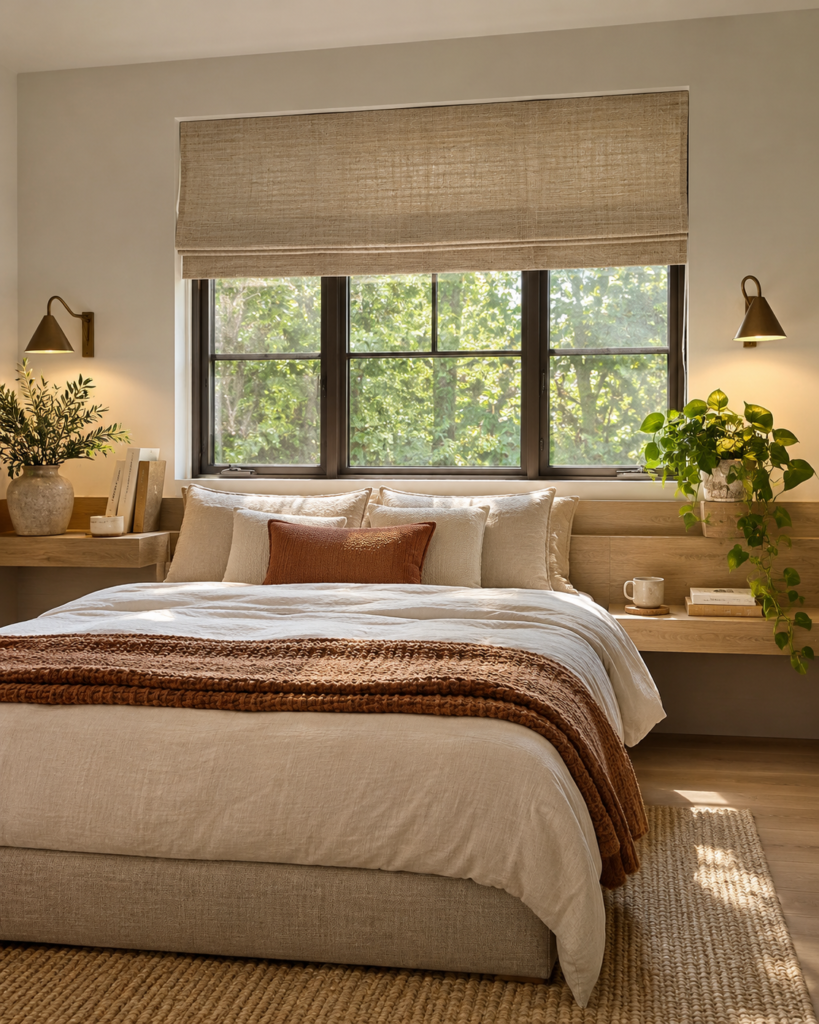
9. Deep Window Sill Built-In Floating Ledge
Room Size
Budget Tier
$$ $200 to $800
Calm Score
4 out of 5
Neat and space-saving, as long as the ledge stays lightly styled.
Layout Map: Top View
The Concept
If your window has a deep sill, extend it into a long ledge that runs the width of the wall behind the bed. It works as a headboard shelf and a pair of nightstands in one.
Why It Works
- You get surface space without nightstands taking up floor space.
- It frames the window and makes it look intentional.
- It’s a smart move in narrow rooms where nightstands don’t fit.
Designer’s Practical Fix
- Build the ledge at the same height as the sill, usually 6 to 10 inches deep.
- Support it with hidden brackets screwed into studs.
- Keep only light things on it, like a small lamp, a book and a plant.
- Keep the stretch of ledge directly under the window clear, so an inside-mount shade can close all the way down.
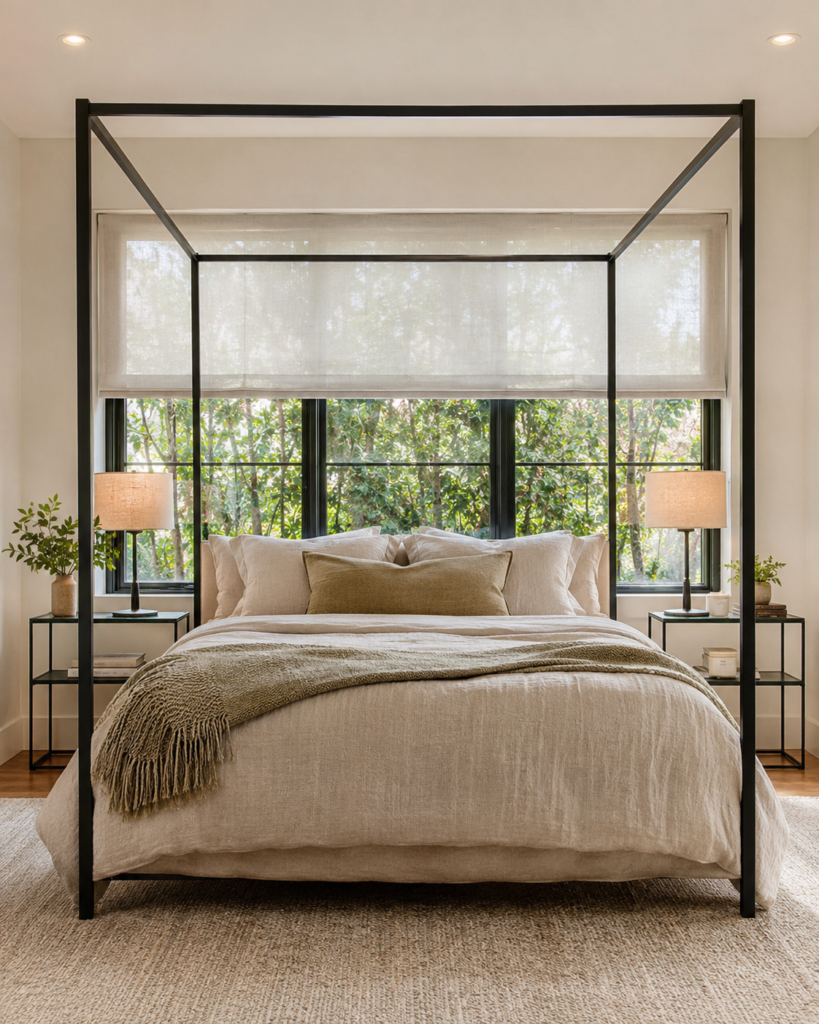
10. Minimalist Four-Poster or Canopy Window Frame
Room Size
Budget Tier
$$$ Over $800
Calm Score
3 out of 5
Beautiful, but a canopy adds strong vertical lines and visual weight.
Layout Map: Top View
The Concept
A slim four-poster or canopy frame set in front of the window creates a frame within a frame. Keep it minimal, in black metal or light wood, so it outlines the window instead of hiding it.
Why It Works
- It gives a small or plain window a sense of drama.
- It defines the sleeping area in a larger room.
- Sheer fabric on the frame softens morning light.
Designer’s Practical Fix
- Plan on a ceiling height of at least 8 feet, since many canopy frames stand about 7 feet tall or more.
- Pick thin posts, about 1.5 to 2 inches, so the view isn’t blocked.
- Leave 2 to 3 inches between the frame and the window treatment.
- If you drape fabric over the frame, keep it light and well away from lamps and heaters.
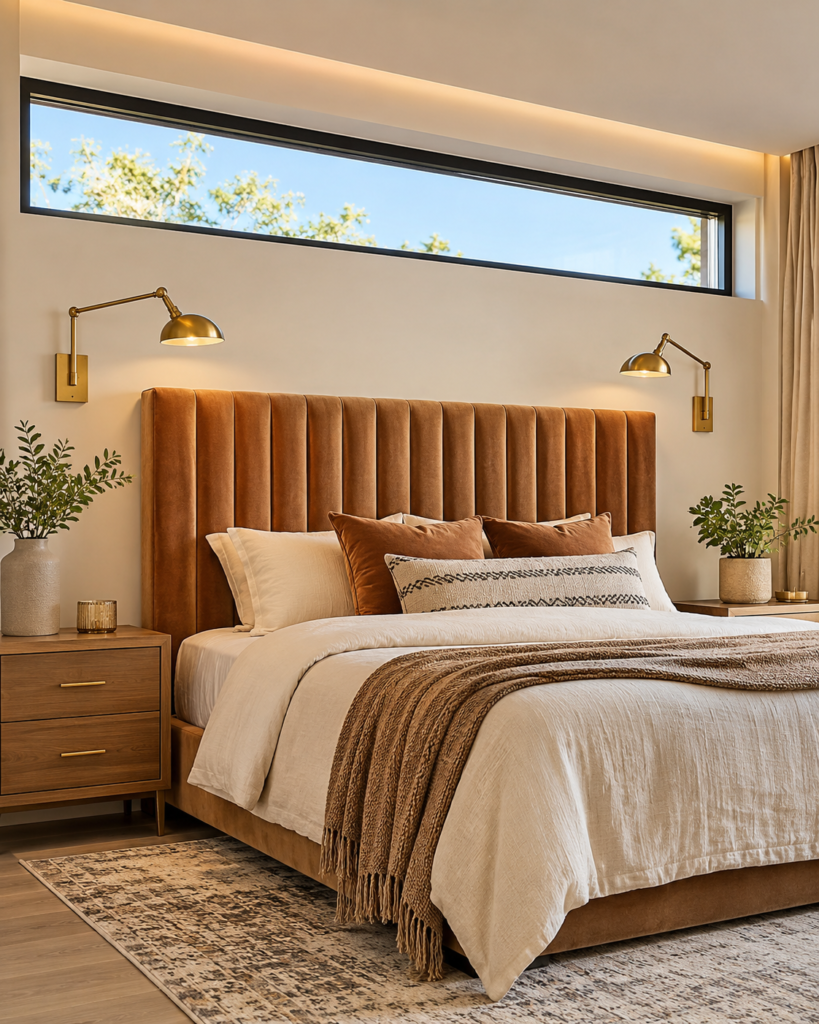
11. High Transom or Clerestory Window Headboard Wall
Room Size
Budget Tier
$$ $200 to $800
Calm Score
5 out of 5
Light stays high and out of your eyes, with a solid wall behind your head.
Layout Map: Top View
The Concept
A high clerestory or transom window sits well above the bed, so the wall below it works like any solid wall. That means you can go bold with a tall headboard that reaches up toward the glass.
Why It Works
- You get privacy and daylight at the same time.
- A tall headboard fills the gap between the bed and the window nicely.
- High glass draws the eye up and makes the ceiling feel taller.
Designer’s Practical Fix
- Keep the top of the headboard about 6 to 12 inches below the window.
- High windows are hard to reach, so choose a motorized or remote-controlled shade if you need darkness.
- Choose an upholstered or wood headboard about 48 to 60 inches tall, depending on the window height.
- Use wall sconces on each side instead of tall table lamps.
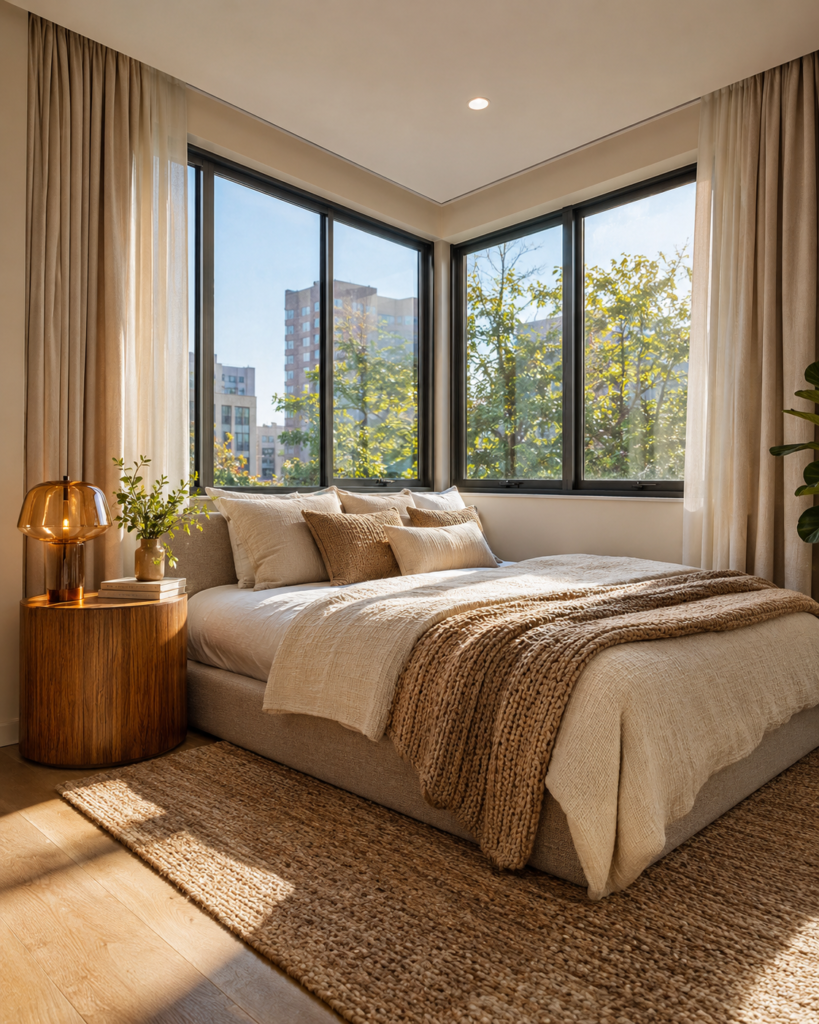
12. The Corner Window L-Shape Wrap Layout
Room Size
Budget Tier
$$ $200 to $800
Calm Score
3 out of 5
Bright and airy, but glass on two sides makes the room harder to darken.
Layout Map: Top View
The Concept
When windows wrap around a corner, set the headboard against one window wall and let the side of the bed run along the second window. Then treat both windows as one wrap-around feature.
Why It Works
- It makes the most of light from two directions.
- It frees up the rest of the room for a walkway or a reading chair.
- One continuous window treatment ties both walls together.
Designer’s Practical Fix
- Use a corner-connecting curtain track, or two rods that meet neatly in the corner.
- Keep at least 24 inches of walkway on the open side of the bed.
- Choose blackout shades on both windows, since light comes from two sides.
- Make sure at least one window can still open fully.
Bedroom Layouts With a Window Behind the Bed at a Glance
| Layout Style | Best Room Size | Recommended Window Treatment | Ideal Headboard Type | Calm Score |
|---|---|---|---|---|
| 1. The Wall-to-Wall Floor-to-Ceiling Drapery Backdrop | Small, Medium, Large | Ceiling-track ripple-fold drapes with blackout lining | Upholstered, any height | 5 out of 5 |
| 2. The Low-Profile Platform Bed Under a Picture Window | Small, Medium, Large | Inside-mount blackout roller or roman shade | None, or very low | 5 out of 5 |
| 3. Symmetrical Centered Window with Flanking Nightstands | Small, Medium, Large | Outside-mount curtains stacked beside the frame | Medium height, below the sill | 5 out of 5 |
| 4. The Balanced Asymmetric Off-Center Window Layout | Small, Medium, Large | A wide rod across the wall, or a single panel | Upholstered, below the sill | 4 out of 5 |
| 5. Floating Strap-Cushion Headboard Under High Glass | Small, Medium, Large | Inside-mount cellular shade | Strap cushions on a wall rail | 4 out of 5 |
| 6. The Bay Window Bed Nook Retreat | Medium, Large | Cordless shades on each pane, plus a curtain across the opening | None, the bay walls frame the bed | 4 out of 5 |
| 7. The Light-Filtering Open Wood Slat Headboard | Small, Medium, Large | Light-filtering roman shade with an optional blackout liner | Open wood slats | 4 out of 5 |
| 8. Centered Bed Flanked by Twin Vertical Windows | Medium, Large | Matching shades or panels on both windows | Tall statement headboard | 4 out of 5 |
| 9. Deep Window Sill Built-In Floating Ledge | Small, Medium, Large | Inside-mount shade | The ledge itself acts as the headboard | 4 out of 5 |
| 10. Minimalist Four-Poster or Canopy Window Frame | Medium, Large | Sheer panels on the frame, plus a shade on the window | Open canopy frame | 3 out of 5 |
| 11. High Transom or Clerestory Window Headboard Wall | Small, Medium, Large | Motorized or remote-controlled cellular shade | Tall upholstered or wood | 5 out of 5 |
| 12. The Corner Window L-Shape Wrap Layout | Medium, Large | Corner-connecting track with blackout shades | Low, below both sills | 3 out of 5 |
The best bedroom layouts with a window behind the bed don’t hide the window. They work with it. Measure your sill, pick the window treatment that matches how much light you want, and let that awkward window become the frame your bed was missing. When you’re ready for the next step, explore more bedroom layout and decor ideas on Comfy Home Decors.