Young Boys Bedroom Ideas That Look Stylish and Grow With Him
The secret to a young boy’s room that doesn’t feel babyish (or cost a fortune every two years) is a simple formula: timeless neutral base + durable textures + swappable hobby accents.
Keep the big, expensive things plain and sturdy. Think warm white or soft greige walls, a simple wood bed, a washable rug and storage that works at any age. Then let his current obsession show up only in things that are cheap and easy to change, like pillows, posters, bedding and a few bins.
Dinosaurs this year, soccer next year, space after that? No problem. You swap a few accents in an afternoon instead of replacing a novelty bed.
That’s the whole plan in a nutshell. Now here’s how I’ve put it into practice, plus what the pretty photos never show you.
Why I Stopped Buying Themed Furniture
When my son was three, I bought a race car bed. He loved it for about eighteen months. By five, he called it “a baby bed,” and I was stuck selling a giant plastic car online for a fraction of what I paid.
That’s when I switched to the base-plus-accents approach. Every idea below follows it, so the room can move from little kid to big kid to tween without a full redo.
Walls and Architecture That Carry the Room
Board and Batten on the Lower Half
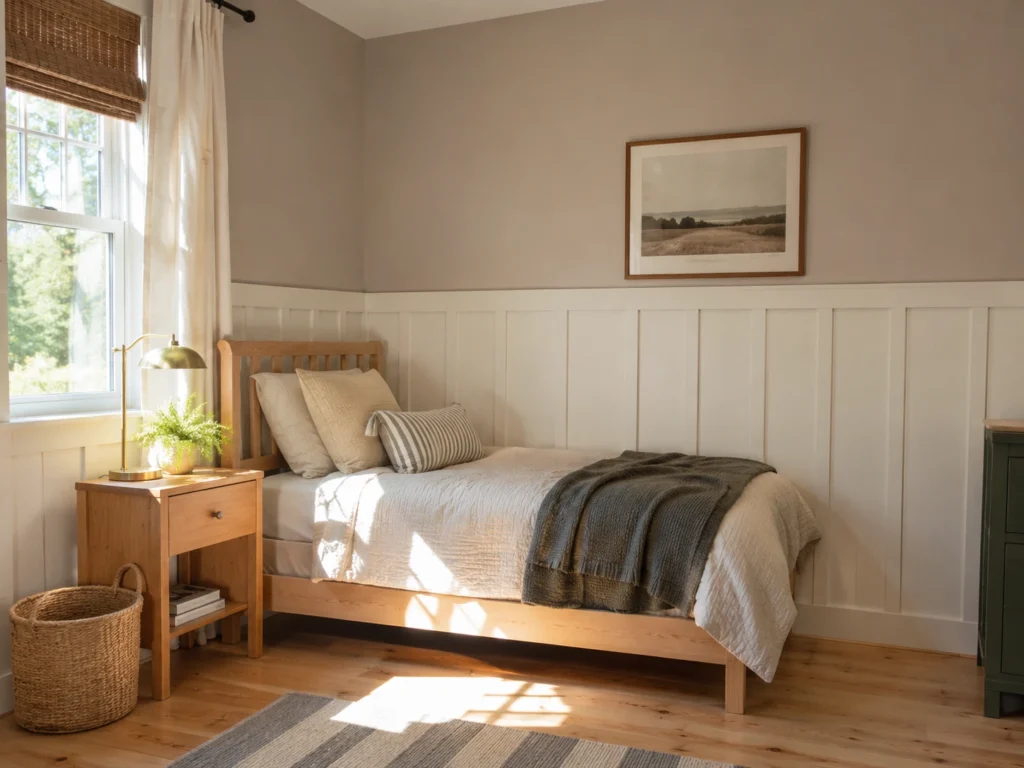
Board and batten on the bottom half of the wall is all over Pinterest, and for good reason. It adds texture, looks custom and gives a simple room instant character. It fits nicely with a Vintage Sport Minimalist look or a classic cottage style.
Here’s the reality the photos hide: The lower wall is exactly where toy cars, scooter handles and muddy shoes hit. Painted wood takes those knocks far better than drywall, and you can touch up a scuff with a tiny brush in thirty seconds.
Budget or renter swap: Use thin MDF strips attached with removable mounting strips, or skip the wood and paint a two-tone wall with a crisp tape line at the same height. You get the same visual split for the cost of a quart of paint.
A Modern Forest Green Accent Wall
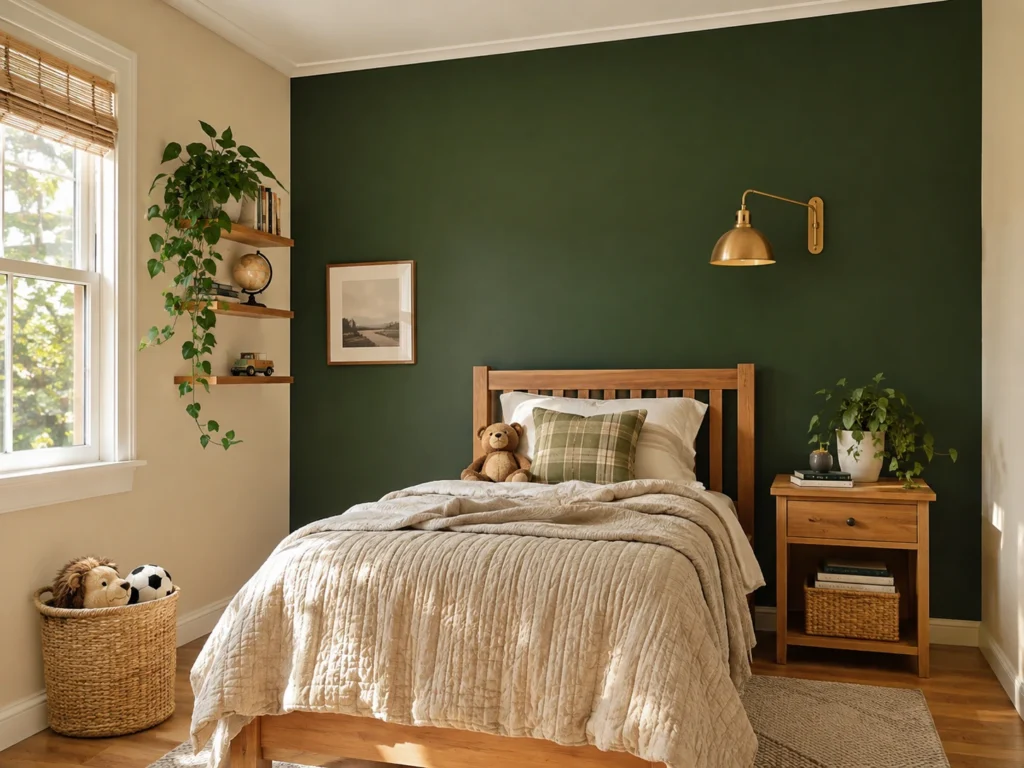
One wall in a deep, earthy green behind the bed sets up a Forest Camp or Adventure vibe without a single cartoon tree. Green also works for every age. It’s just as cool at twelve as it is at four.
In practice, darker colors hide smudges better than pale ones, which matters when little hands touch walls all day. Just pick a washable paint labeled scrubbable so you can wipe off crayon without leaving a shiny patch.
Budget or renter swap: Grab a sample pot and paint a large arch or rectangle behind the bed instead of the full wall. It’s a weekend project, and it’s easy to paint over when you move out.
A Subtle Mountain Mural
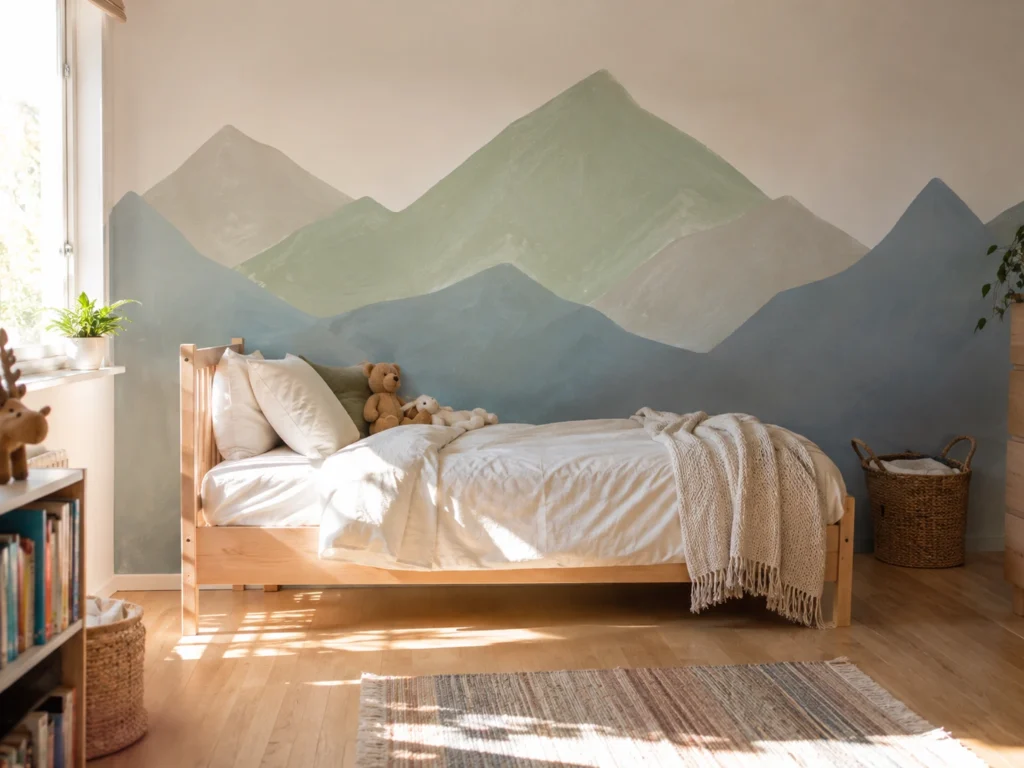
A soft, hand-painted mountain range in two or three muted tones gives the room a dreamy Explorer feel. Keep the colors calm, like sage, stone and dusty blue, so it reads more like art than a theme.
The reality is that bold, detailed murals get old fast. Simple shapes and quiet colors stay stylish for years and work with whatever bedding he’s into next.
Budget or renter swap: Peel-and-stick mountain wall decals or removable wallpaper panels do the job beautifully. I’ve used them in a rental and they came off cleanly with a hairdryer and some patience.
A Muted Navy Backdrop Over a Warm Neutral Base
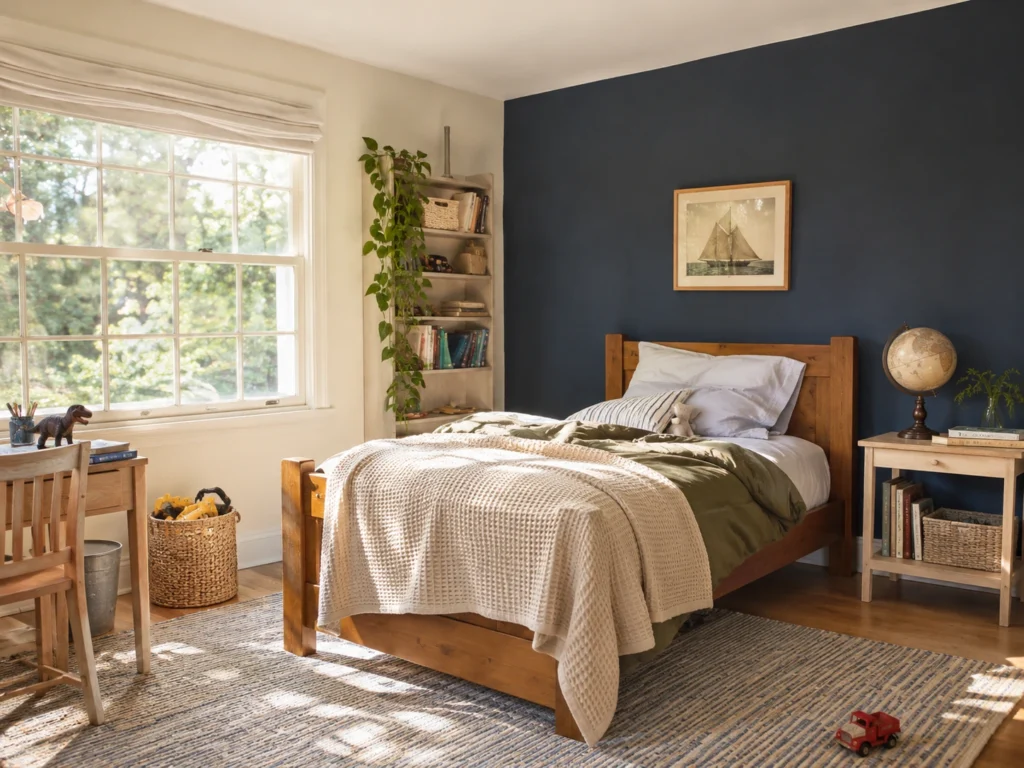
Moody Navy and Wood is one of the most saved kids’ room looks on Instagram. Paint one wall a soft, muted navy and keep the other three a warm neutral like creamy white or light greige. Add wood furniture and it instantly feels grown-up and cozy.
The warm neutral base is what makes this room last. Navy is bold, but it’s balanced by calm walls, so the room never feels dark or heavy. And when he’s older, the navy still works perfectly in a teen room.
Budget or renter swap: Bring navy in through a large textile instead of paint, like a navy wall hanging, a canvas headboard panel or blackout curtains in a deep blue. It gives the mood with zero commitment. Navy loves warm wood, and these tips on pairing moody colors with dark wood furniture work just as well in a kid’s room.
Beds and Sleep Zones
A Low Floor Bed for the Little Years
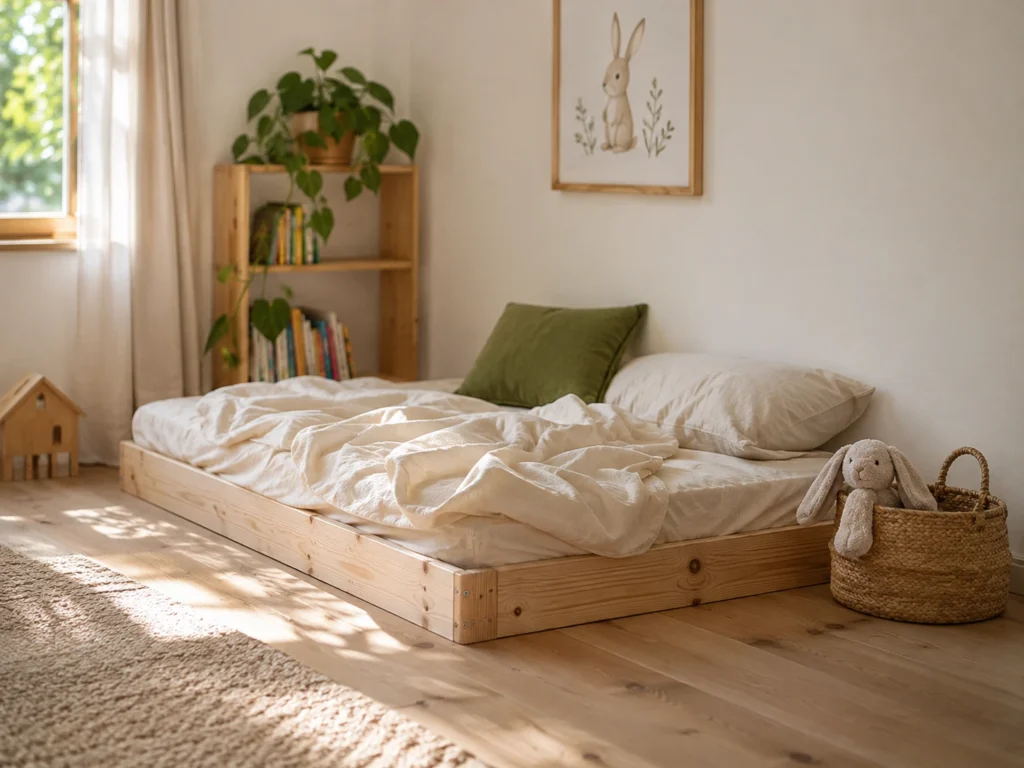
Montessori-style floor beds look minimal and peaceful in photos, especially with a simple wood frame and a soft linen canopy. They let little ones climb in and out on their own, which builds independence early.
Here’s the honest part: A mattress on the floor needs airflow, or it can get damp underneath. A low slatted frame fixes that while keeping it close to the ground and safe from falls.
Budget or renter swap: A simple low wooden slat base costs much less than a designer frame. Later, you can move the same mattress onto a standard bed as he grows.
Rustic Wood Bunk Beds
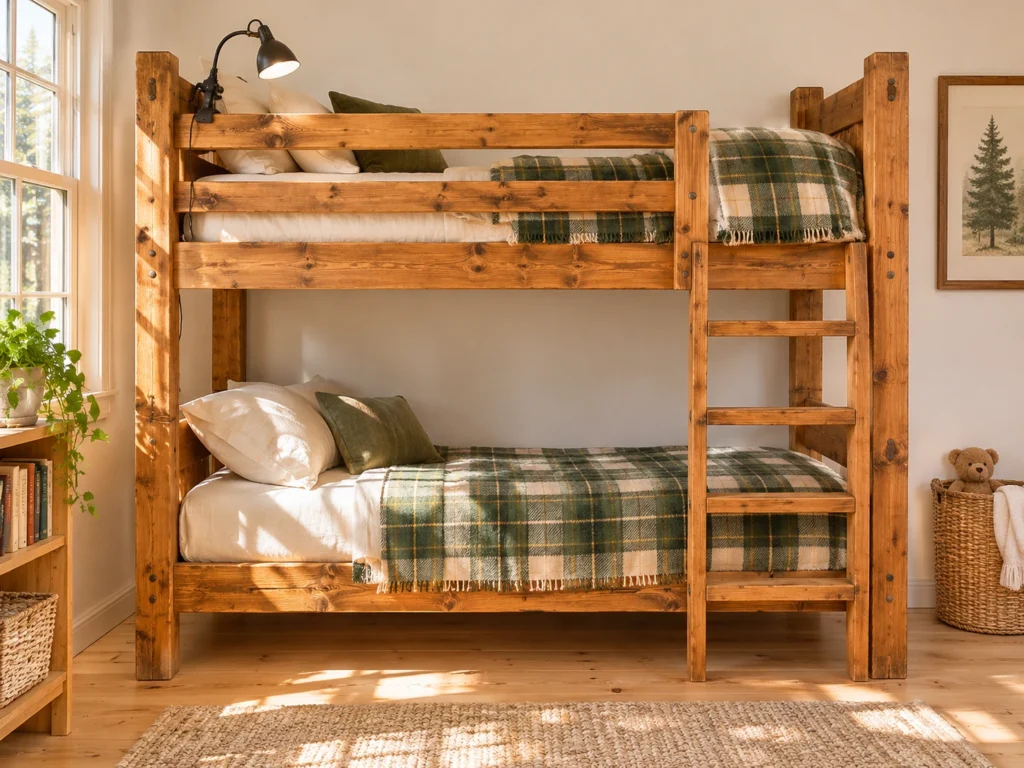
Solid wood bunks in a natural or warm stain are a Forest Camp dream, especially with a plaid blanket and a little lantern clipped to the rail. They save tons of floor space in small or shared rooms too.
Safety matters here. Keep the top bunk for kids six and older, make sure guardrails run along both sides, and anchor the frame if your model allows it. Wobbly bunks are not worth the money saved.
Budget or renter swap: Look for a bunk that splits into two twin beds. When he’s older or no longer sharing, you separate them and get two regular beds out of one purchase.
A Corner Daybed Reading Nook
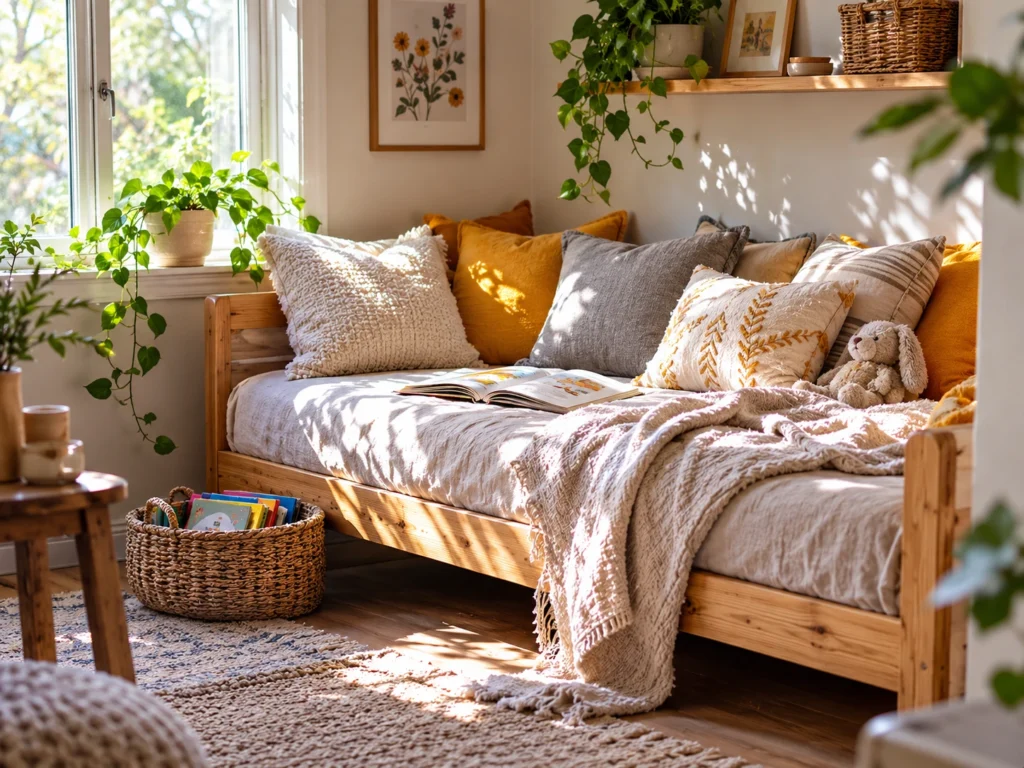
A daybed pushed into a corner with lots of pillows works as a bed at night and a cozy reading spot during the day. It’s perfect for a Scandinavian Playful look with soft greys, whites and a pop of mustard.
The reality is that a daybed collects things. Blankets, stuffed animals and books will pile up. A small basket at the end of the bed gives that stuff somewhere to land.
Budget or renter swap: Turn a regular twin bed into a daybed by pushing it lengthwise against the wall and adding long bolster pillows along the back. Same look, no new furniture. For more ways to layer pillows and throws, browse these simple bedding and bed styling ideas.
An Upholstered Headboard in Performance Fabric
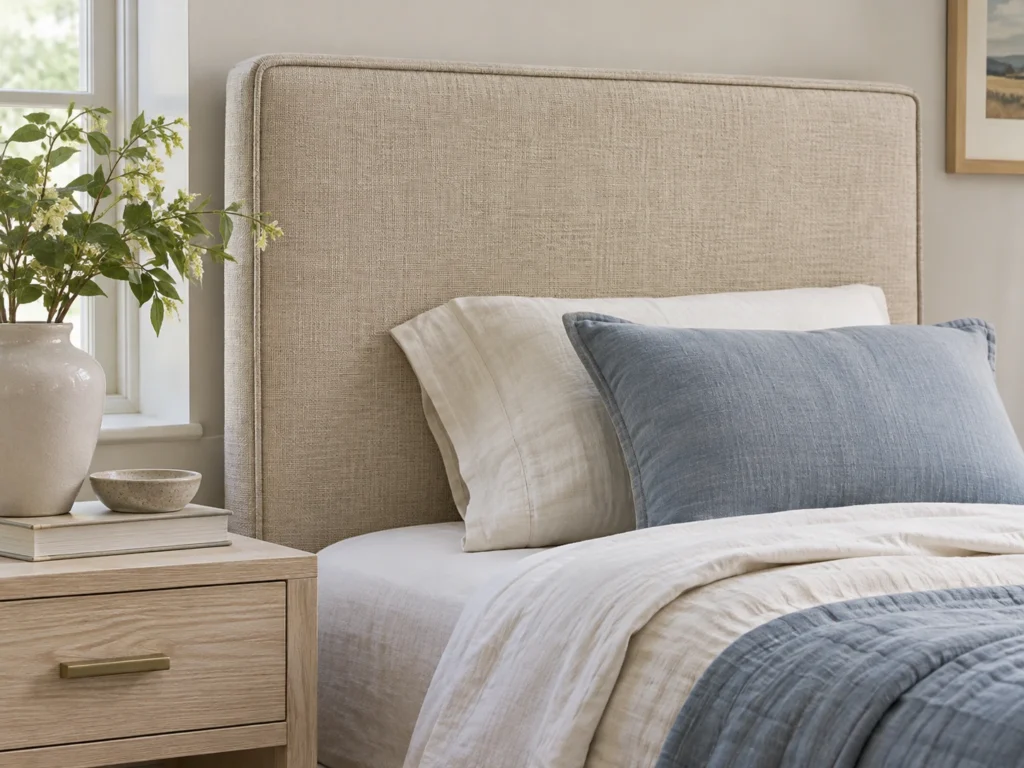
A padded headboard makes any bed feel finished and grown-up. Choose a performance fabric in a durable neutral like oatmeal, charcoal or olive, and it’ll look good for years.
Kids lean against headboards with sticky hands and sometimes markers. Performance fabric resists stains and wipes clean far better than regular linen or velvet.
Budget or renter swap: Make a DIY headboard by covering a plywood board with foam and durable canvas, then mount it to the wall. It costs a fraction of store-bought ones and is easy to recover later.
Storage and Organization That Actually Gets Used
Low-Profile Book Display Ledges
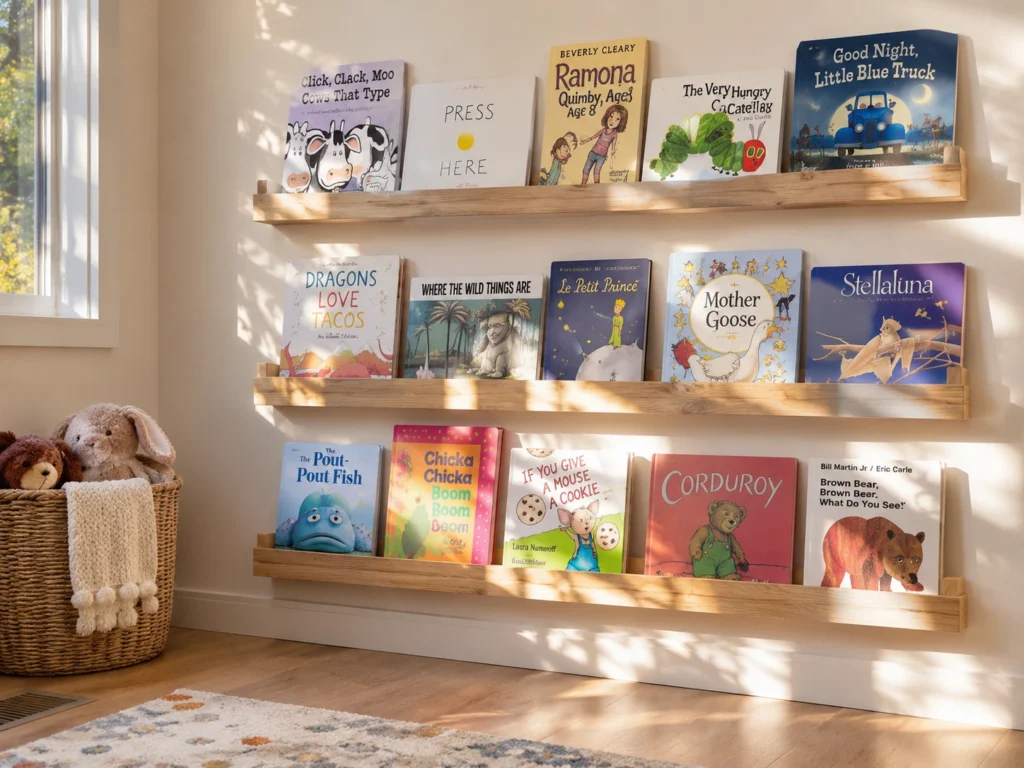
Front-facing book ledges on the wall look like something out of a cute bookstore. Seeing the covers makes kids actually want to pick books up, and it’s a great way to add color without clutter.
Mount them low, at his height, not yours. If he can’t reach his books, he’ll ask you every single time or pull a chair over.
Budget or renter swap: Use inexpensive picture ledges from a home store or thrift shop, painted to match the wall. Simple wooden spice racks work too for smaller books.
An Open Canvas Bin Toy System
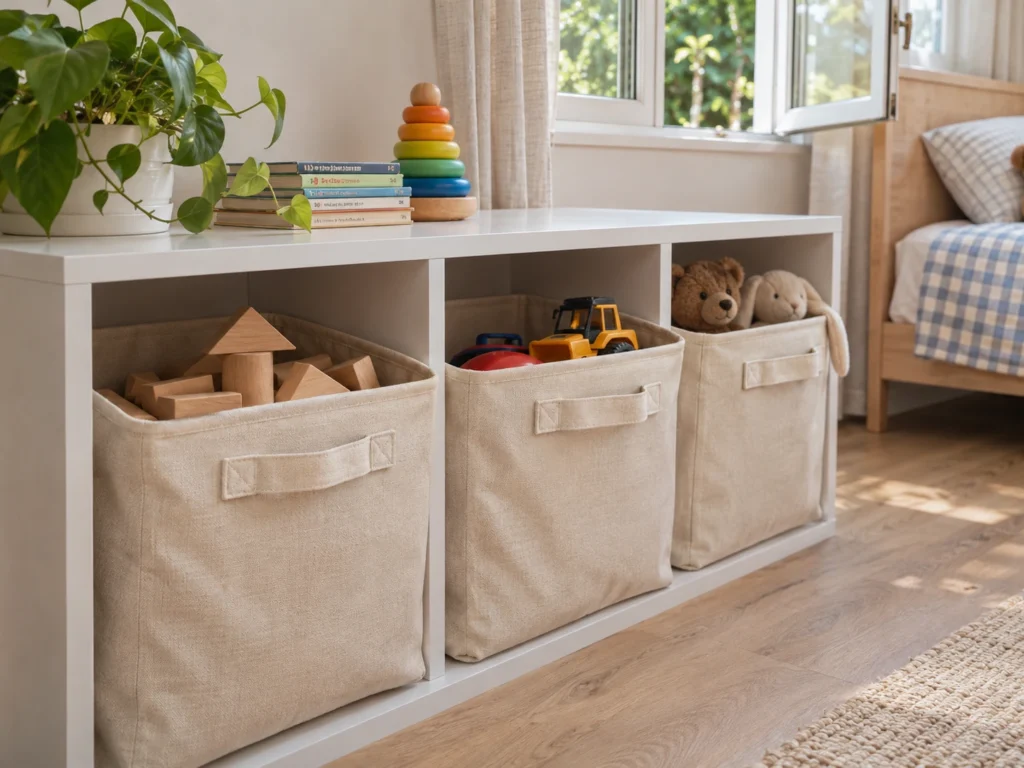
Open canvas bins on a low shelf are the backbone of a calm kids’ room. They look tidy in neutral tones, and he can toss toys in without a struggle.
Here’s the truth: lids and complicated drawers rarely get used by little kids. Open bins mean cleanup actually happens. Add picture labels (a photo of blocks, cars or dinosaurs) so even non-readers know where things go.
Budget or renter swap: Thrifted woven baskets, sturdy cardboard bins wrapped in fabric, or even painted wooden crates work just as well and add a warm, natural texture.
A Pegboard Wall for Hats and Gear
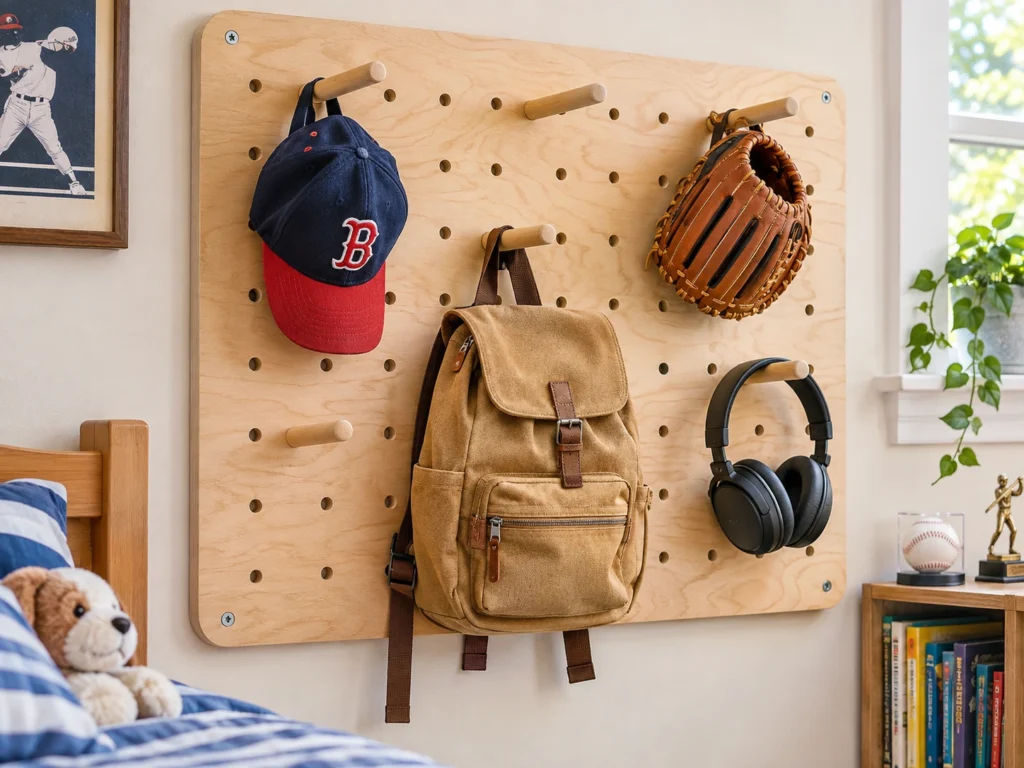
A wooden pegboard is perfect for an Industrial Loft or Vintage Sport look. Hang caps, backpacks, a baseball mitt and headphones on it, and suddenly the gear becomes part of the decor.
The practical win is that nothing ends up on the floor. Just place the pegs at his reach so he can use it on his own, and add a few small shelves for little items.
Budget or renter swap: A row of simple wall hooks or a wooden peg rail gives the same function for less. Use removable hooks in a rental. You’ll find more practical bedroom decor and storage ideas to browse before you buy anything big.
Modular Cube Storage
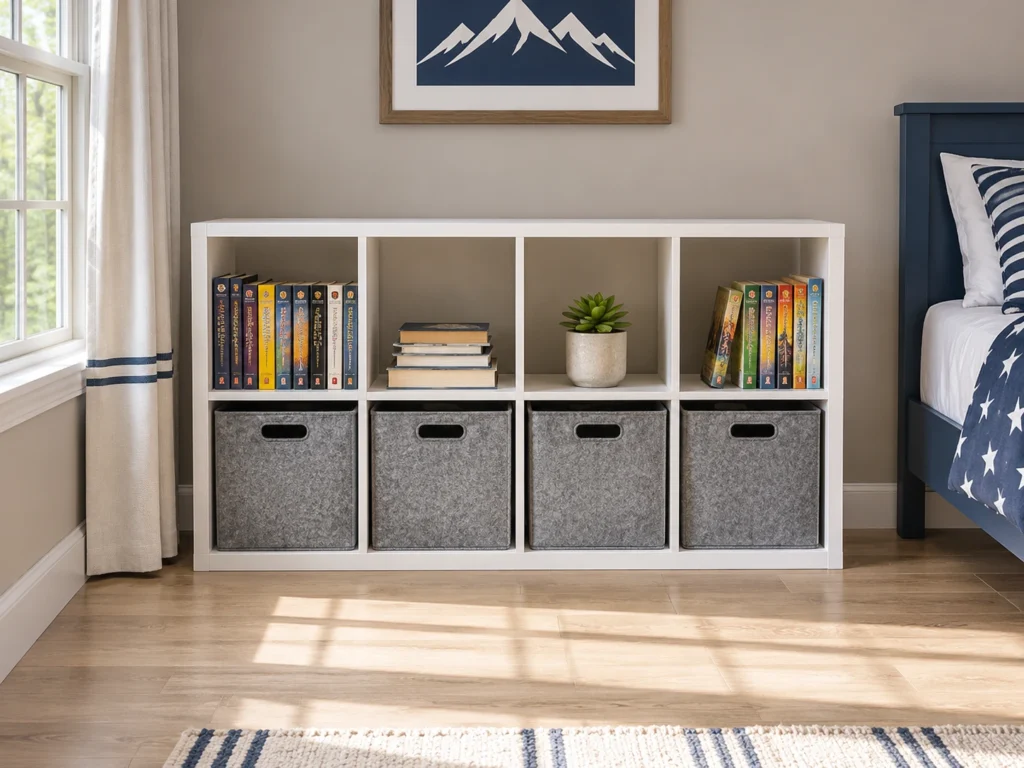
Cube shelving is the ultimate grow-with-him piece. Today it holds toy bins, tomorrow it’s books and a speaker, and later it’s video games and sports trophies.
Anchor it to the wall. Kids climb everything, and a tipping cube unit is a real danger. Anti-tip straps are inexpensive and take ten minutes to install.
Budget or renter swap: Buy a basic cube unit and change its look over time with different bins, from bright colors when he’s small to neutral fabric or wood as he gets older.
Study, Play and Creative Zones
A Floating Craft Desk
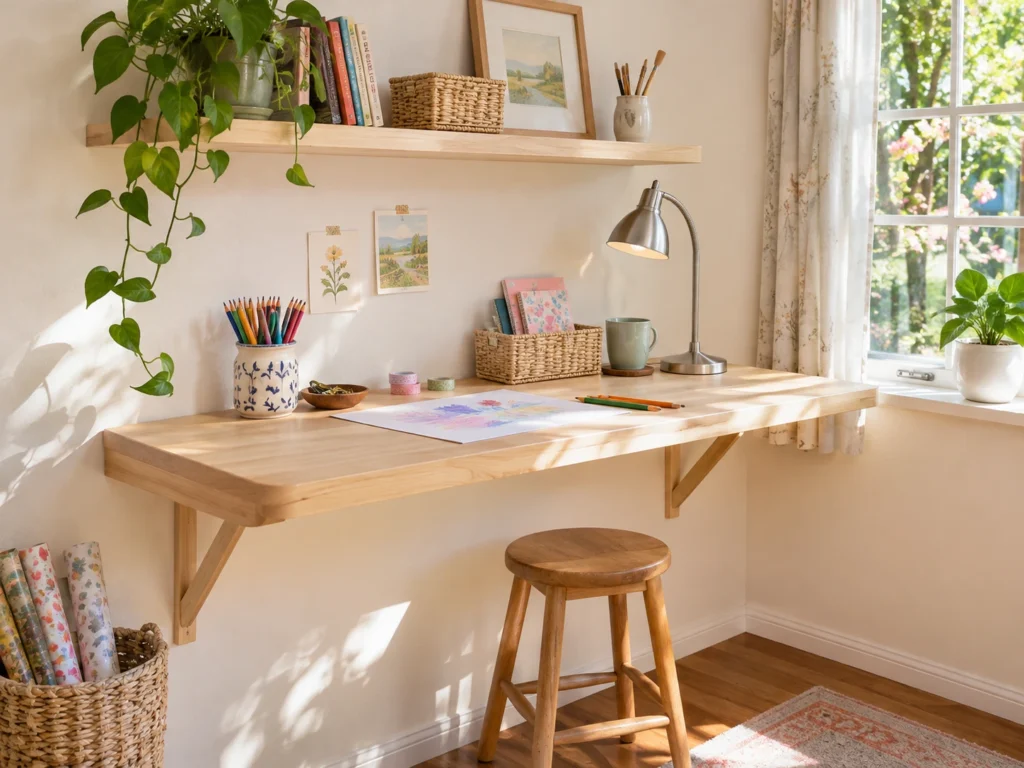
A wall-mounted desk with a shelf above it gives him a spot for drawing, Lego building and later homework, without bulky legs taking up floor space. It looks clean and modern in almost any style.
The reality is that craft desks get messy. A small rolling cart beside it keeps crayons, glue and paper in one place, and it can roll away when guests come over.
Budget or renter swap: A sturdy wooden shelf mounted on strong brackets at desk height does the same job for less. Add a clip-on lamp and a cheap stool and he’s set.
Indoor Climbing Holds or Wall Bars
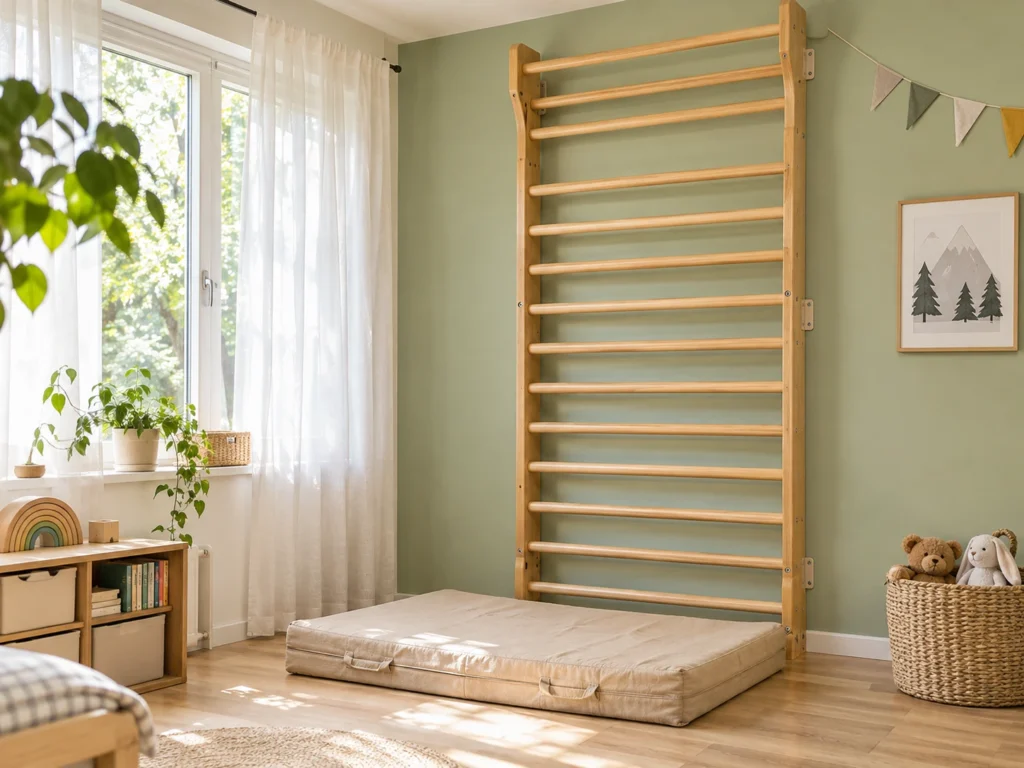
A few climbing holds on a painted wall or a set of wooden wall bars (Swedish ladder style) look amazing in an Adventure or Explorer room. And for an active kid, it’s a fun way to burn energy on rainy days.
Safety comes first here: Holds need to be bolted into wall studs or a properly mounted plywood backing board, never just drywall. Always add a thick crash mat underneath and keep the climbing height low for younger kids.
Budget or renter swap: A freestanding wooden climbing triangle or a small indoor gym set needs no drilling at all and can move to a playroom later.
A Sensory Soft Rug Floor Play Zone
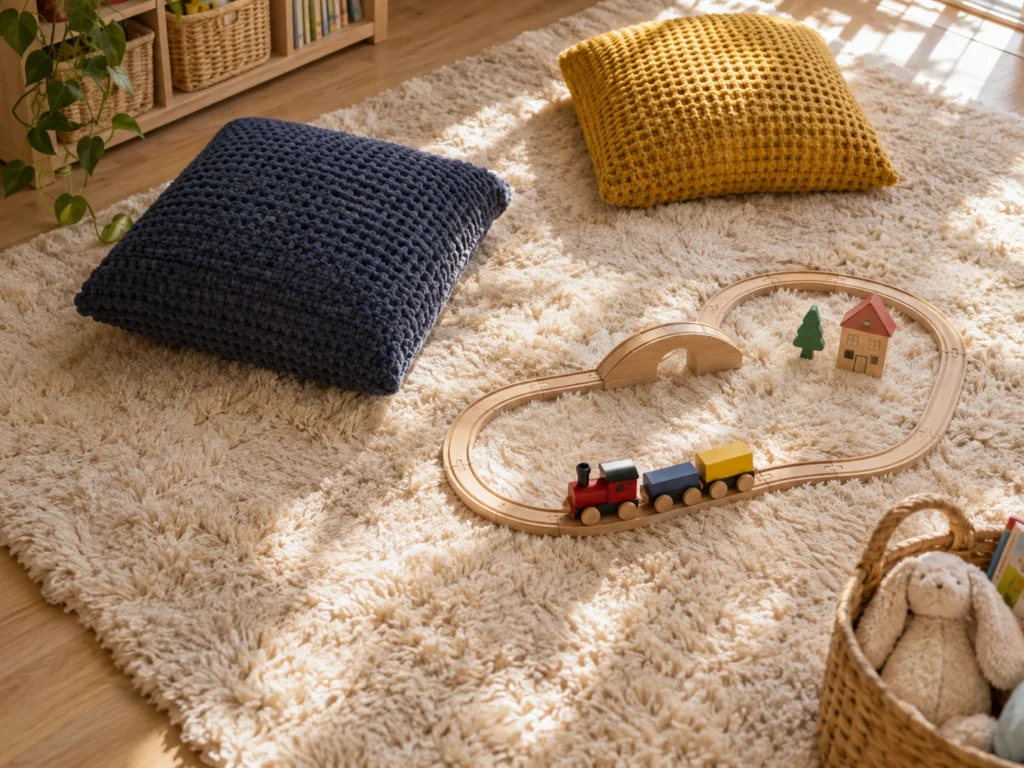
A thick, plush rug with a few floor cushions creates a play area where he can build, read and lounge. Kids spend so much time on the floor, so giving them a soft, comfy spot matters more than people think.
Spills will happen, so choose a rug that’s washable or easy to spot clean. A non-slip pad underneath keeps it from sliding when he’s running around.
Budget or renter swap: Layer a small plush rug on top of a cheaper, flat-weave base rug. You get the soft zone without paying for one huge fluffy rug.
Lighting and Finishing Accents
A Vintage Cage Pendant Light
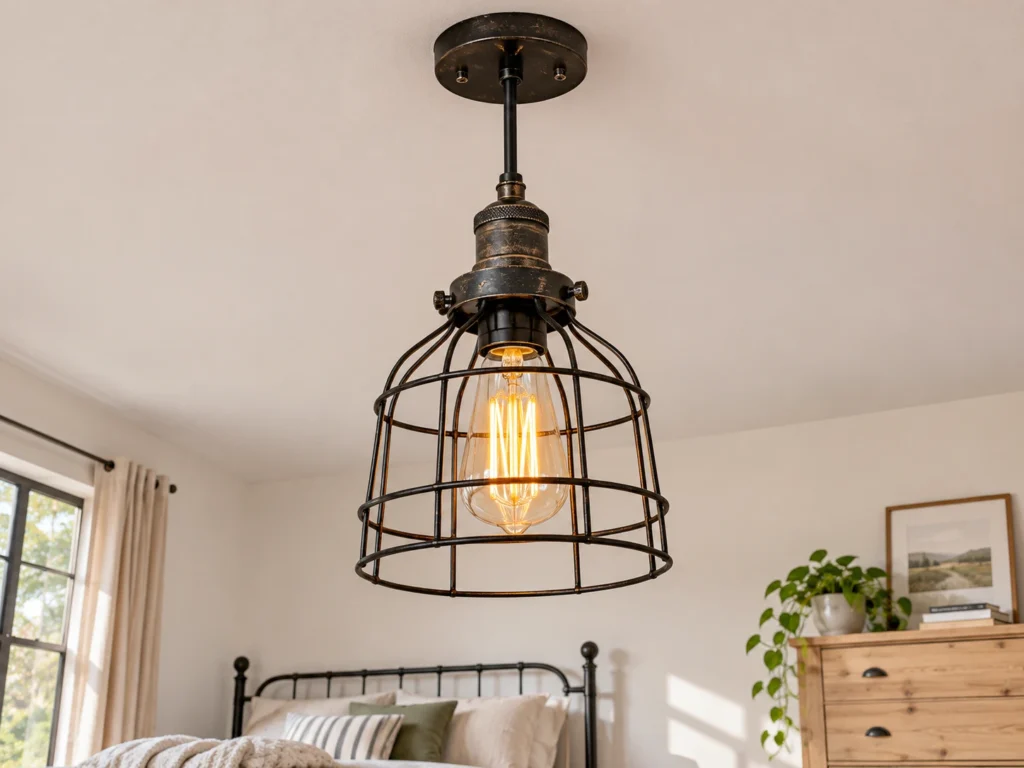
A metal cage pendant with an exposed vintage-style bulb is the perfect touch for an Industrial Loft vibe. It looks cool, and it’s a light fixture he won’t outgrow.
Choose an LED vintage-style bulb since it stays cool to the touch, and hang the pendant high enough that it can’t be reached from the top bunk or by jumping on the bed.
Budget or renter swap: A plug-in cage pendant that hangs from a ceiling hook and runs its cord to a wall outlet needs no electrician. Swag the cord neatly with a few hooks. For a softer glow at bedtime, these renter-friendly fairy light bedroom ideas need no nails at all.
Framed Retro Sports Pennants
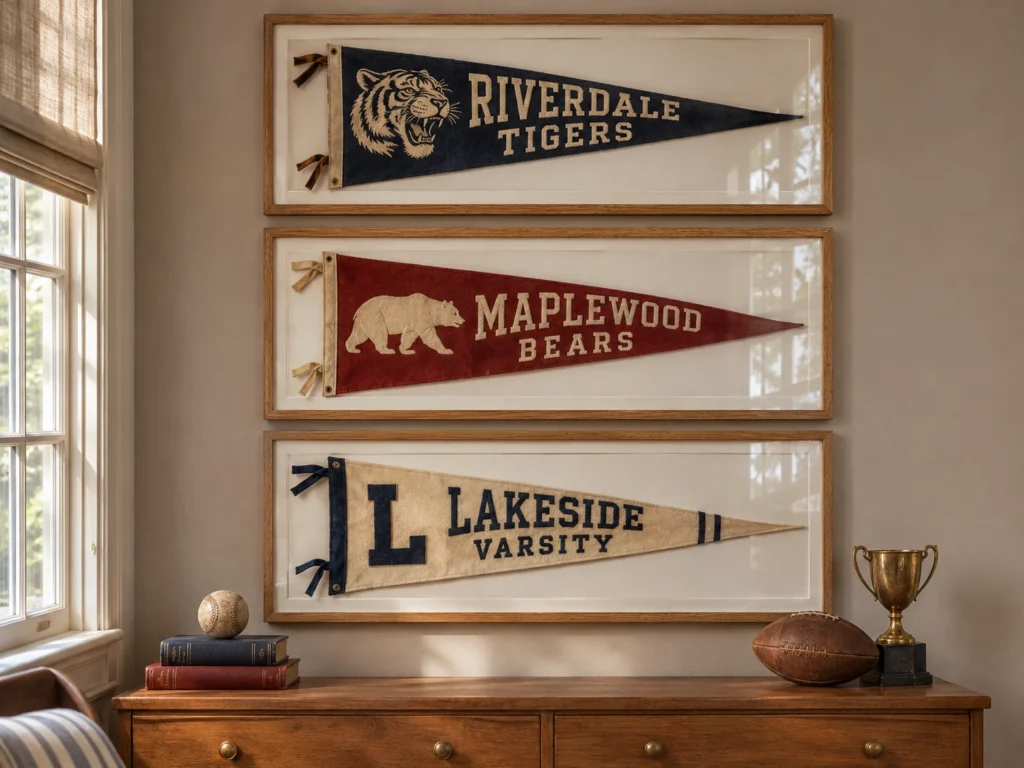
Felt pennants in vintage colors look great framed or simply hung in a row. They bring a classic Vintage Sport Minimalist feel and show off his favorite teams or hobbies.
The nice part is how easy they are to swap. Once interests change, you just switch out what’s in the frames.
Budget or renter swap: Thrifted frames with a fresh coat of spray paint are perfect here. You can also make DIY pennants from felt and fabric glue in about an hour.
Washable Layered Rugs and Woven Baskets
Finish the room with a washable base rug and a few woven baskets around the space. Baskets hold extra blankets, stuffed animals or balls, while the rugs warm up the floor and pull the colors together.
Let’s be honest: kids’ rooms see juice spills, muddy socks and the occasional art disaster. Washable rugs that go straight into the machine make life so much easier.
Budget or renter swap: Look for machine-washable rugs and pick up baskets at thrift stores or discount home shops. Woven textures add warmth for very little money.
Durability Comparison for High-Traffic Boys’ Rooms
| Option | Pros | Durability | Cleaning Caveat |
|---|---|---|---|
| Machine-washable rug | Easy to clean, affordable | Medium | Check size fits your washer |
| Wool rug | Naturally soil-resistant, soft | High | Spot clean only, avoid soaking |
| Polypropylene rug | Water-resistant, very sturdy | High | Can feel less soft underfoot |
| Matte wall paint | Hides wall flaws well | Low to medium | Scrubbing can leave shiny spots |
| Eggshell or scrubbable paint | Wipes clean, gentle sheen | High | Shows wall bumps slightly |
| Board and batten | Takes knocks, easy to touch up | High | Dust collects on ledges |
| Open canvas bins | Kid-friendly, fast cleanup | Medium | Fabric can sag over time |
| Cube storage | Adapts for years | High | Must be anchored to the wall |
Common Styling Mistakes to Avoid
- Buying a toddler-sized novelty bed: Car beds, rocket beds and themed frames look adorable, but they’re outgrown fast. A simple, sturdy frame lasts many more years.
- Using high-gloss paint on the walls: Gloss shows every dent, scuff and bump. Save it for trim and go with a scrubbable eggshell or satin on the walls.
- Putting all the storage up high: If he can’t reach the bins, the toys end up on the floor. Keep everyday items at kid level and store extras up top.
- Going all in on one theme: Theme wallpaper, theme bedding and theme decor feel dated within a year. Keep themes in small, swappable pieces.
Frequently Asked Questions
How do you make a boys’ room look grown-up but still fun?
Start with a neutral wall color, wood furniture and simple bedding. Add personality through posters, pillows and bins in his favorite colors so the fun parts can change easily.
What colors work best for a young boy’s bedroom?
Navy, forest green, warm white, greige, rust and soft sage all work well. These colors stay stylish from toddler years through the teens and pair easily with wood tones.
How can I make a small boys’ room feel bigger?
Use wall-mounted storage, floating desks and a loft or bunk bed to free up floor space. Keep the walls light and stick to a few main colors so the room feels open.
Is it worth buying expensive kids’ furniture?
Only for pieces that grow with him, like a quality bed frame, a dresser or cube storage. Skip pricey themed items, since they’re usually outgrown within a couple of years.
Final Thoughts
You don’t need a huge budget or a perfect Pinterest room. Start by zoning the space: where he sleeps, where he plays, where things get stored. Then keep the base colors calm and adaptable.
Once that foundation is in place, the fun stuff is easy to change as he grows. Every new hobby becomes a quick, cheap refresh instead of a full makeover, and the room stays his for years to come.