Baby in Bedroom with Parents: 16 Smart Room-Sharing Ideas
The best baby in bedroom with parents ideas all start with one layout: place the crib or bassinet within arm’s reach of the parent who does most night feeds, against an inside wall, at least 24 inches from windows, blinds, cords, and heating or cooling vents.
Then set up the diaper station a few steps away on a dresser, not beside your pillow, so your bed stays a place for sleep.
The Quick Layout Answer
- Sleeper: bassinet or mini crib beside the feeding parent’s side of the bed
- Wall: an inside wall, at least 24 inches from windows, cords, and vents
- Walkways: 24 to 30 inches of clear floor around your bed
- Diaper zone: on a dresser a few steps away, with its own dim light
- Night light: warm amber or red, 2200K to 2700K, placed low
Sharing a bedroom with baby doesn’t have to turn your room into a storage unit. The goal is a calm grown-up bedroom with one small, organized baby zone tucked inside it.
I’ll be honest, the first room-sharing setup I helped arrange was a mess. The diaper caddy lived on the floor, someone tripped over it at 3 AM, and a bright blue night light shone straight onto the parents’ pillows. We fixed it with a rolling cart, a lower warm light, and about two feet of extra floor space. Small changes, huge difference.
Below are 16 room-sharing setups that work in real-size bedrooms, each with a practical tip and an honest note on when to skip it. For more calm, small-space bedroom ideas, visit Comfy Home Decors.
A quick safety note: These are decor and layout ideas. For sleep itself, follow the American Academy of Pediatrics safe-sleep guidance and your pediatrician: baby on their back, on a firm flat mattress, in their own crib or bassinet, with no pillows, blankets, bumpers, or soft toys inside.
1. Bedside Bassinet with a Rolling 3-Tier Diaper Cart
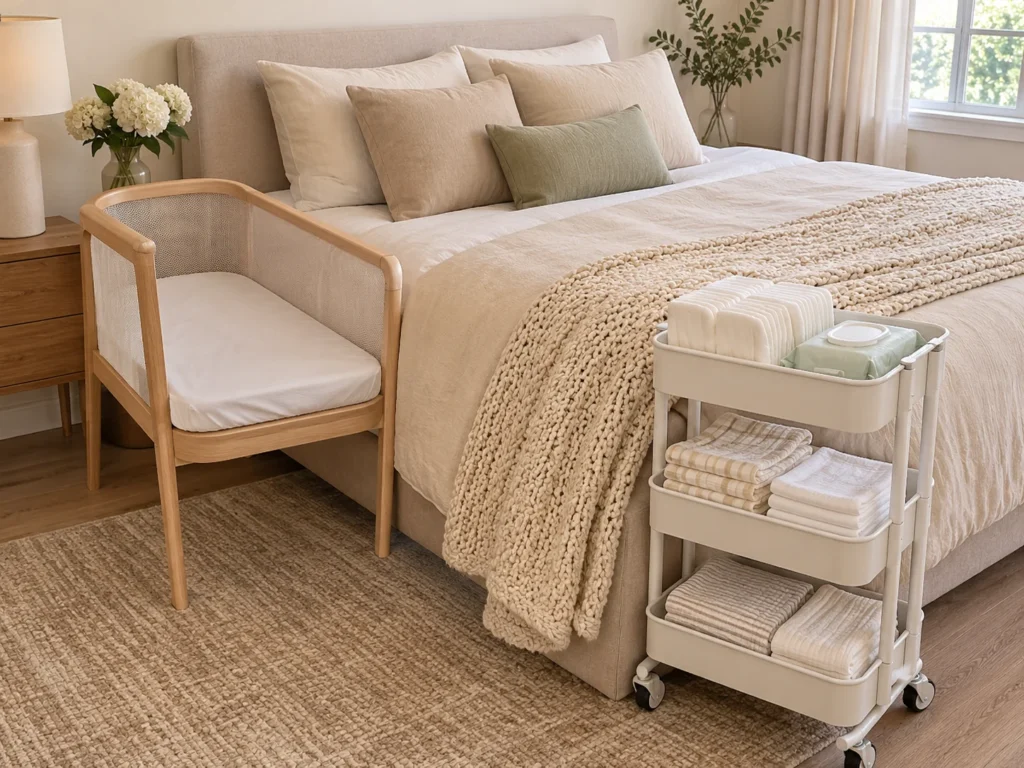
This is the classic newborn setup for a reason. A slim bassinet sits right beside your bed, and a rolling three-tier cart holds diapers, wipes, burp cloths, and a spare outfit.
Most bassinets are around 18 to 20 inches wide and 33 to 38 inches long, so they fit beside even a queen bed in a small room.
Grace’s Field Note: Park the cart at the foot of the bed during the night, not between you and the bassinet. That keeps your path to baby clear. Load the top tier with only what you use at 3 AM: one diaper, wipes, cream, and a burp cloth. Everything else goes on the lower tiers so you’re never digging in the dark.
Skip it if: your baby is already rolling over or near the bassinet’s weight limit. Most babies outgrow bassinets within a few months, so check your model’s limits.
2. Reach-In Closet Turned Mini Crib Nook
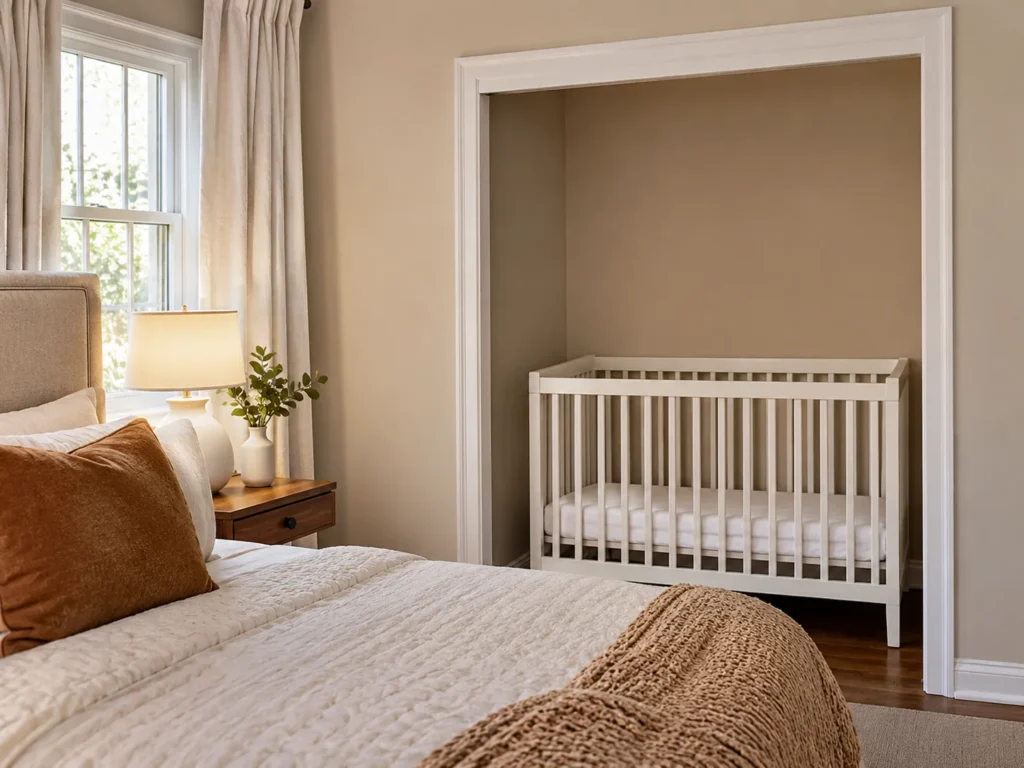
A standard reach-in closet is often 24 inches deep and 4 to 6 feet wide, which can hold a mini crib (usually about 38 by 24 inches) with a little room to spare. It’s one of the most saved master bedroom nursery nook ideas on Pinterest.
Grace’s Field Note: Take the closet doors off completely, or keep them fully open, so air moves freely and you can see baby from bed. Remove the hanging rod and anything stored above the crib, including shelves with bins. Paint the closet interior a soft warm color, and it suddenly looks like a planned alcove instead of a closet.
Skip it if: the closet is poorly ventilated, gets warm, or you can’t see into it from your bed. Airflow and a clear view matter more than the cute nook.
3. Dresser-Top Changing Station Replacing a Changing Table
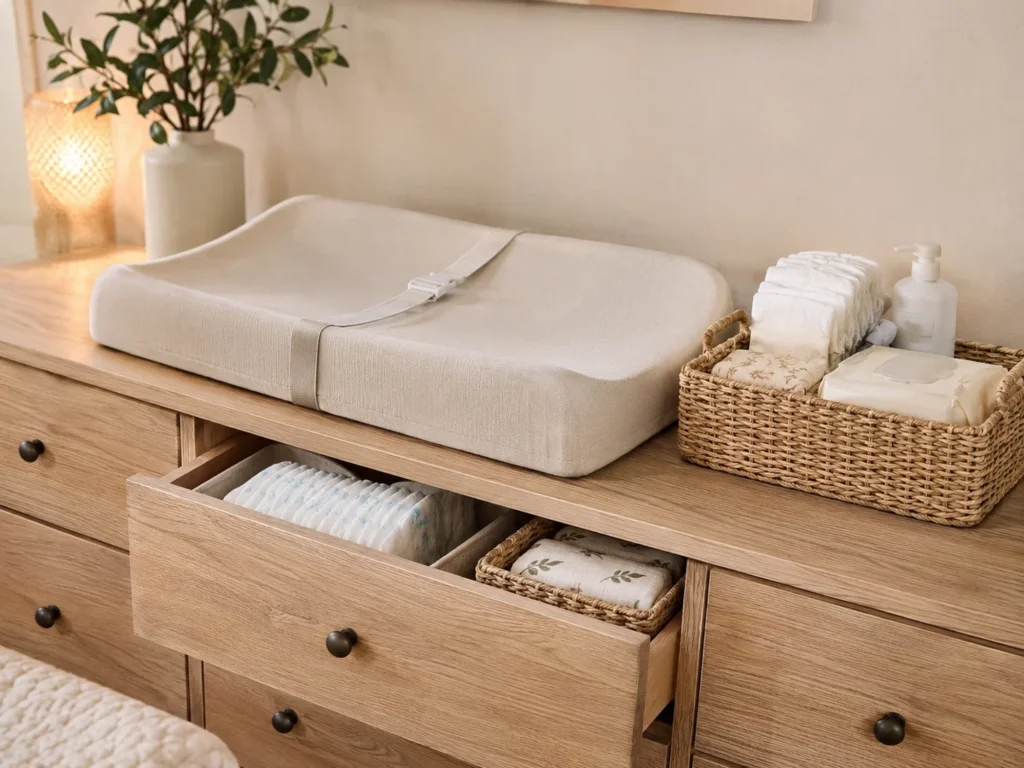
Skip the bulky changing table. A sturdy dresser with a contoured changing pad on top does the same job and stays useful for years.
Look for a dresser around 34 to 38 inches tall, which is comfortable for most adults to change a diaper without bending.
Grace’s Field Note: Anchor the dresser to the wall with anti-tip hardware, always. Choose a changing pad that straps onto the dresser so it can’t slide. Keep the top drawer just for diapering supplies, so everything is one pull away while one hand stays on baby.
Skip it if: your dresser top is less than 18 inches deep. A changing pad needs a stable, wide surface.
4. Linen Curtain Room Divider (Kept Clear of the Crib)
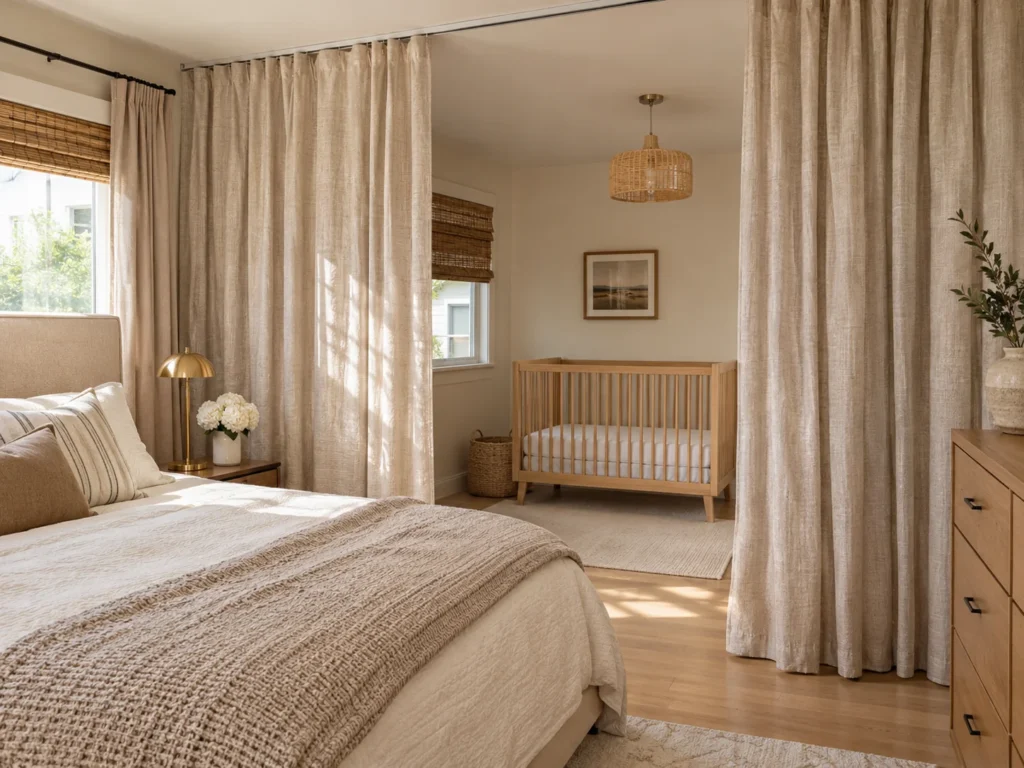
A ceiling-mounted track with soft linen curtains can separate the baby zone from your sleeping area. Close it when you’re reading in bed, open it when you want to see baby.
Grace’s Field Note: Mount the curtain track so the fabric hangs at least 3 feet away from the crib on every side, and never drape anything over or into the crib. Choose a light-filtering linen rather than blackout fabric, so you can still see shapes and movement through it at night.
Skip it if: your room is too small to keep the curtain well away from the crib. A divider that brushes the crib isn’t worth the look.
5. Foot-of-the-Bed Mini Crib Zone

If the sides of your bed are tight, the space at the foot of the bed can often fit a mini crib, especially in long, narrow bedrooms.
Grace’s Field Note: Leave at least 24 inches between the end of your bed and the crib so you can walk between them without squeezing. Turn the crib so its long side faces you, which makes lifting baby out easier. Put a low runner rug in that walkway so night trips stay quiet.
Skip it if: the foot of your bed faces a window or the bedroom door. Drafts and hallway light will wake baby.
6. Alcove Crib with Dimmable Wall Sconces
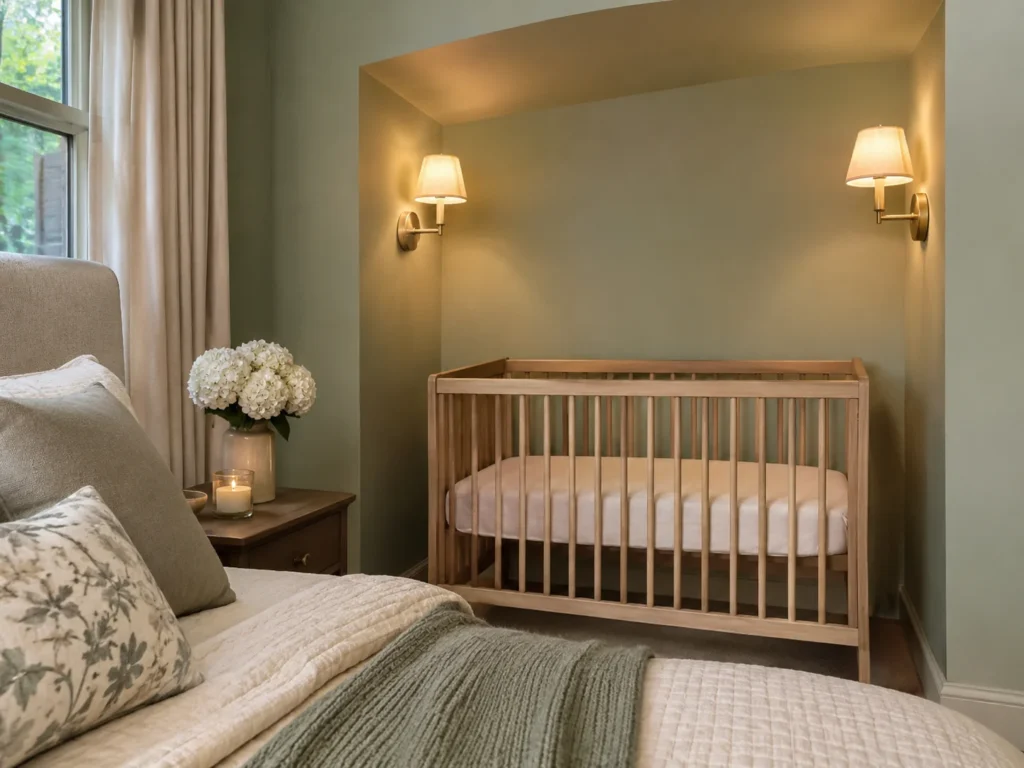
If your bedroom has a natural alcove or a nook between two closets, it can frame a crib beautifully. Add dimmable wall sconces on either side of the alcove, not above the crib.
Grace’s Field Note: Choose hardwired sconces or plug-in sconces with cord covers, and keep every cord at least 3 feet from the crib. Use warm bulbs around 2200K to 2700K on a dimmer, so you can check on baby without flooding the room with bright light.
Skip it if: the alcove holds a window or radiator. Those spots are too drafty or warm for a crib.
7. Corner Crib with Pegboard Storage on the Side Wall
A corner crib with a wooden pegboard on the nearby wall gives you vertical storage for small baby items without taking up any floor space.
Grace’s Field Note: Hang the pegboard on the wall beside the changing area, not directly above or within reach of the crib. Use it for light things only, like bibs, a small basket of socks, and a hook for the swaddle you’re using tonight. Anything heavy belongs in drawers.
Skip it if: you dislike visible storage. A pegboard looks best when it’s kept tidy.
8. Renter-Friendly Peel-and-Stick Accent Wall Zone
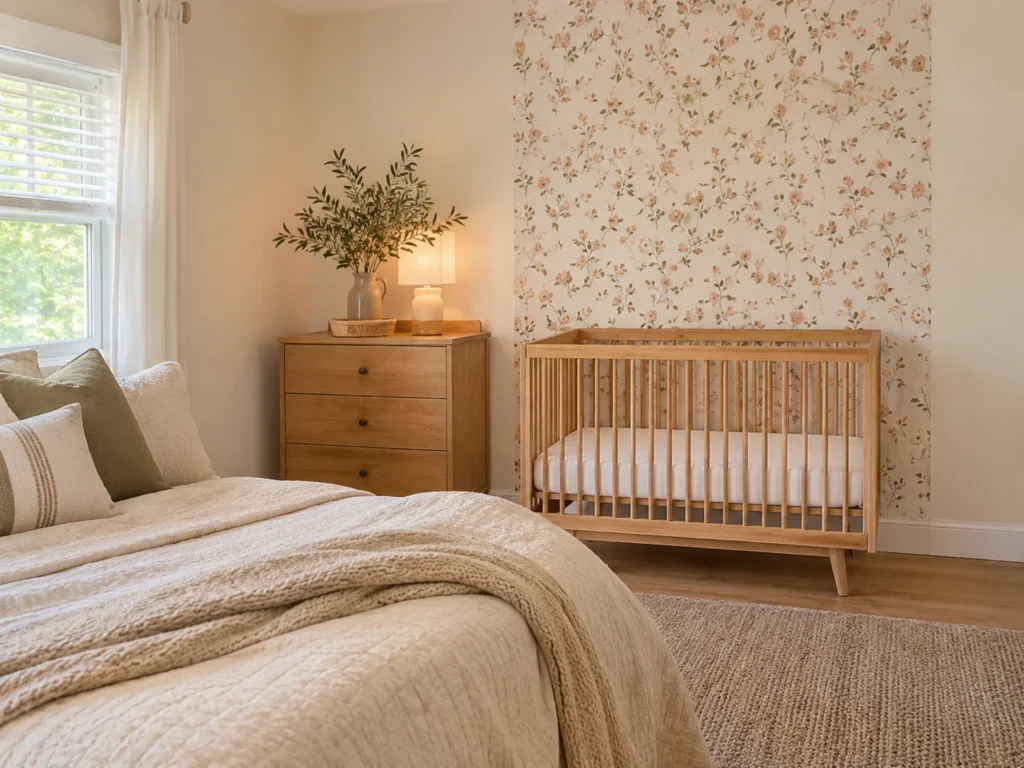
A soft peel-and-stick wallpaper behind the baby area visually marks the “nursery” corner of your bedroom without any permanent changes. Small florals, gentle stripes, and muted checks are all popular right now.
Grace’s Field Note: Keep the accent wall to the width of the baby zone only, around 4 to 6 feet. That creates a clear “room within a room.” Pick a pattern in the same tones as your bedding, so the whole bedroom still feels connected rather than split into two styles.
Skip it if: your walls are textured or freshly painted. Peel-and-stick can lift on texture and pull off new paint.
9. Nursing Chair Corner with a Swing-Arm Lamp
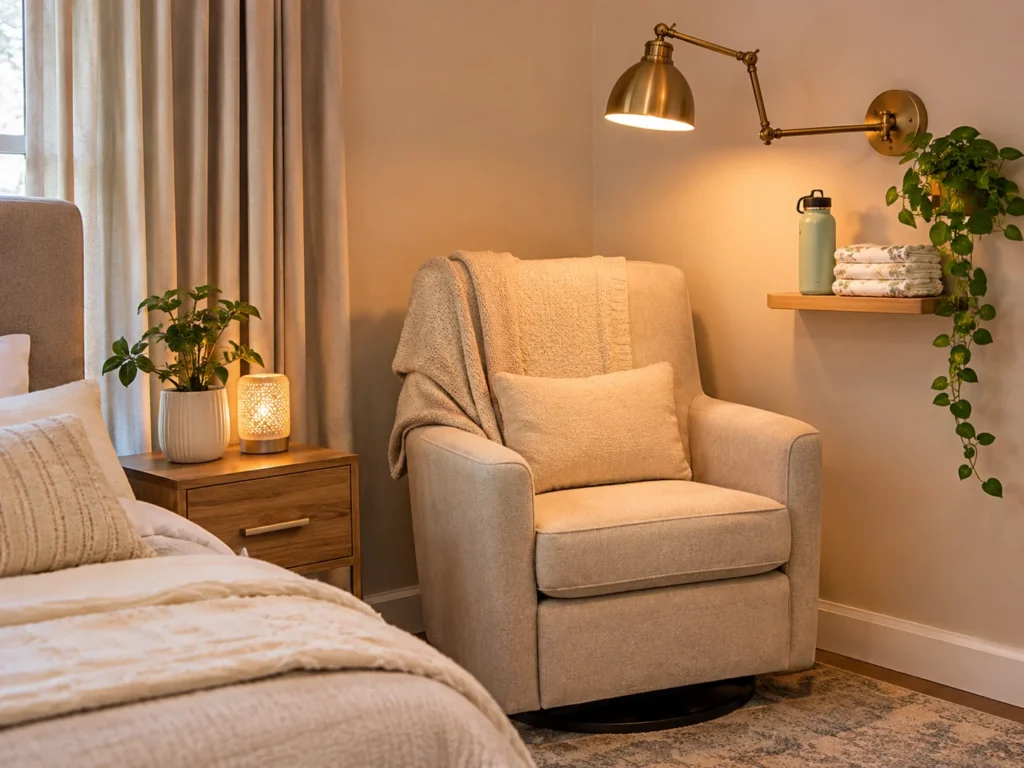
A small glider or armchair in a corner gives you somewhere comfortable to feed baby without waking your partner. A wall-mounted swing-arm lamp beside it saves table space.
Grace’s Field Note: Look for a compact glider under 30 inches wide. Put a tiny side table or wall shelf within reach for water, a phone, and a burp cloth. Angle the lamp down toward your lap and away from your bed, so your partner stays in the dark.
Skip it if: a chair would block your 24 to 30 inch walkway. Feeding in bed with a good pillow may suit your room better.
10. Under-Bed Baby Storage Bins
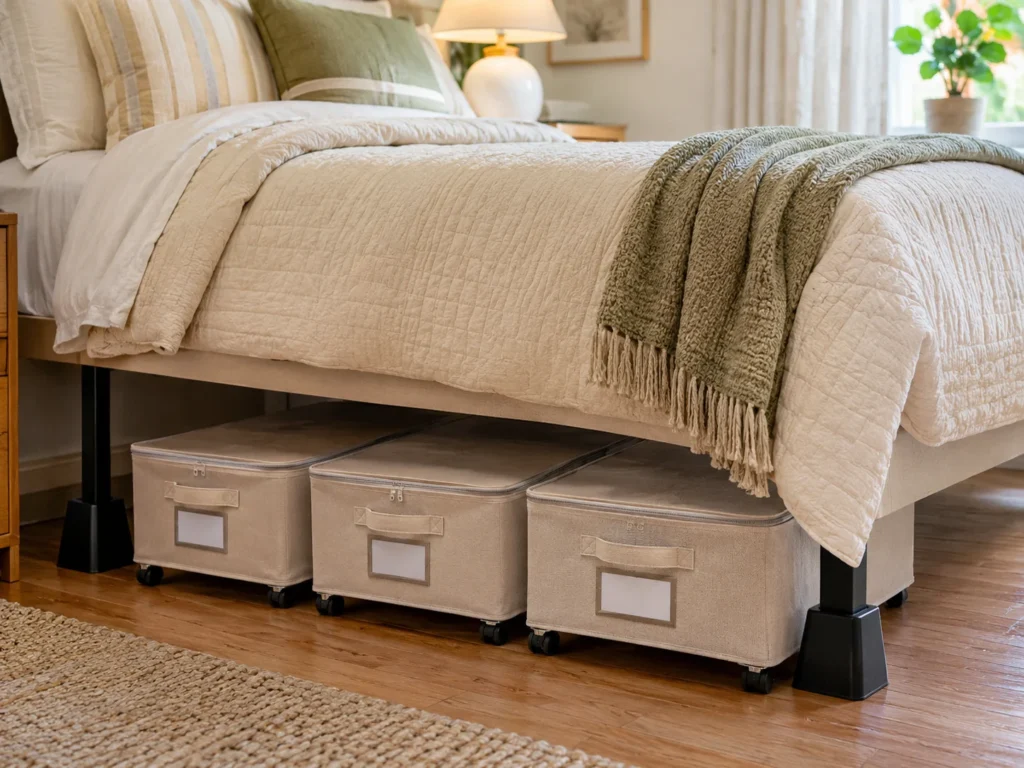
The space under your bed is perfect for things you don’t need every night: the next size of clothes, extra diapers, and spare crib sheets.
Grace’s Field Note: Use low rolling bins with lids, labeled on the short end facing out. If your bed sits low, bed risers can add 3 to 6 inches of storage height. Keep one bin for “outgrown clothes,” and you’ll never have a pile of tiny outfits on the dresser again.
Skip it if: you have a platform bed with no clearance, or under-bed storage would collect dust you’re sensitive to.
11. Matching Neutral Palette So Baby Gear Blends In
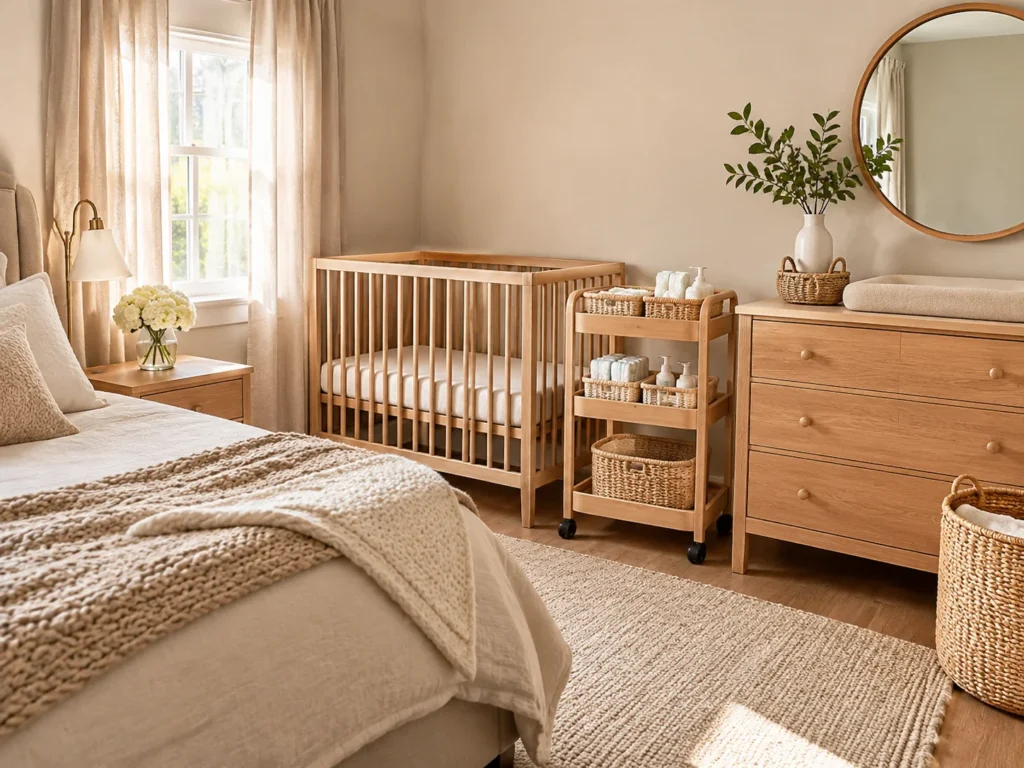
Baby gear comes in bright plastic colors that can make a bedroom feel chaotic. Choosing crib, cart, and storage in your bedroom’s existing tones keeps everything calm.
Grace’s Field Note: Pick one wood tone and one soft color, like natural oak and oatmeal, and buy everything to match. Swap bright plastic bins for woven or fabric baskets. When gear matches your furniture, a small bedroom baby layout looks intentional instead of crowded.
Skip it if: you’ve already bought gear in other colors. Use matching baskets to hide what you have instead of buying again.
12. Over-the-Door Organizer on the Bedroom Door
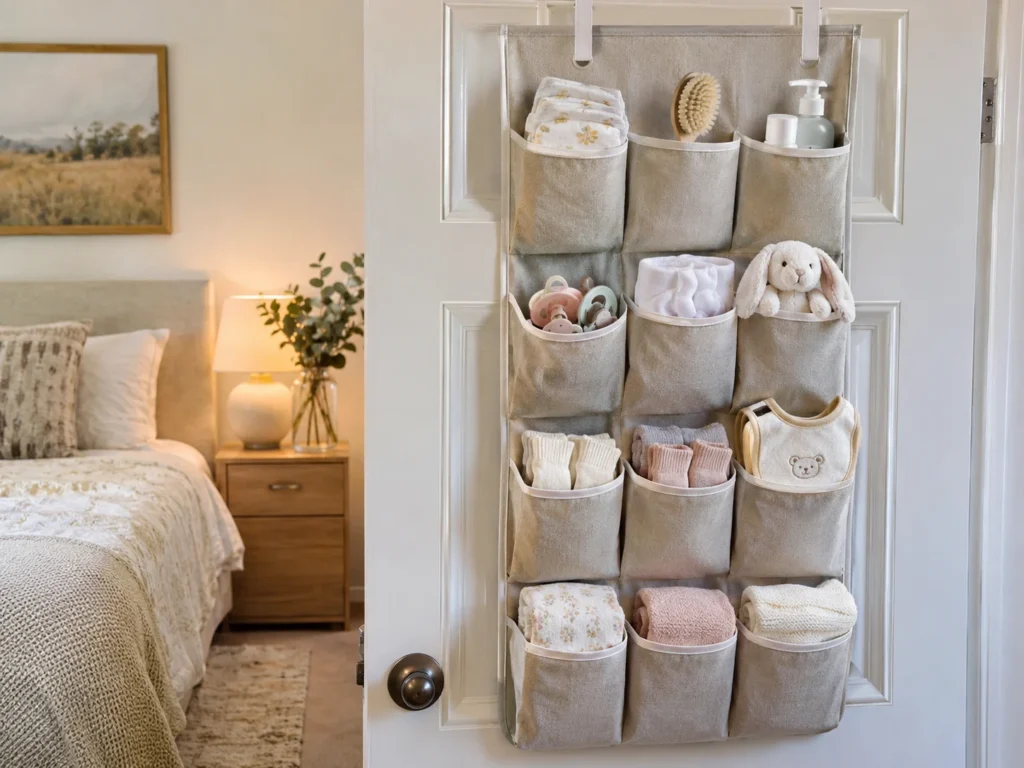
An over-the-door organizer with clear or fabric pockets turns the back of your bedroom door into baby storage. It’s renter-friendly and takes zero floor space.
Grace’s Field Note: Use the top pockets for adult-only items like nail clippers, medicine, and the thermometer, so they stay out of reach as baby grows. Middle pockets work for pacifiers, socks, and bibs. Choose a fabric organizer to keep the door quiet when it opens and closes.
Skip it if: your bedroom door has little clearance at the top, since the hooks can stop it from closing properly.
13. Low Bookshelf Divider
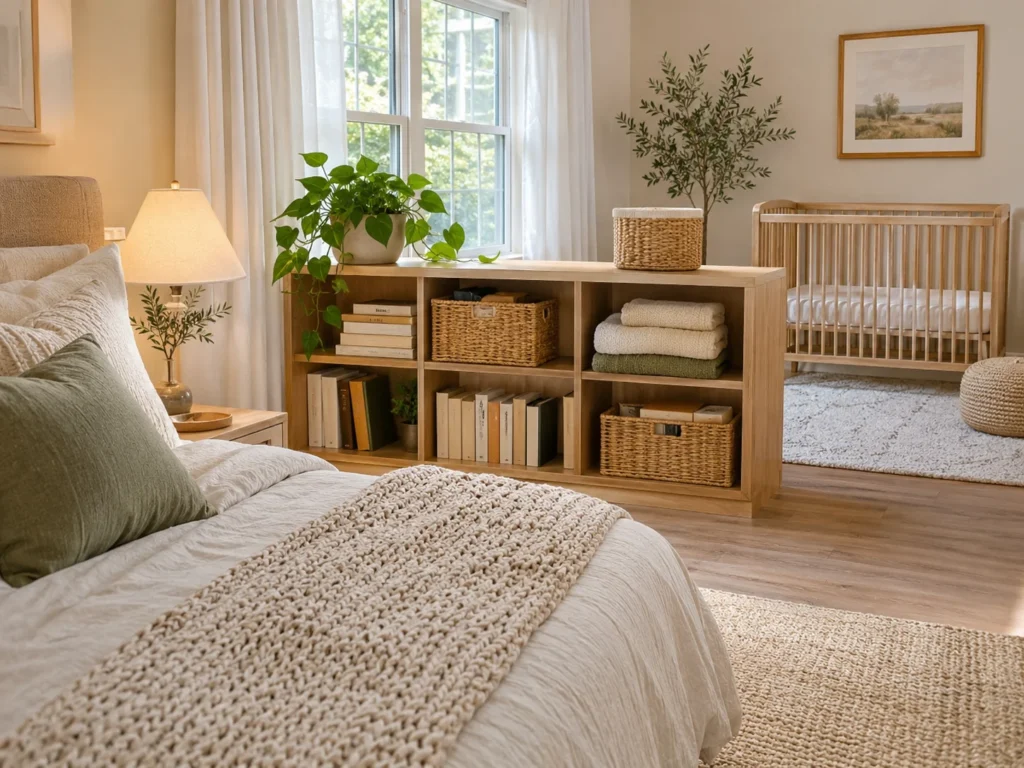
A low, open bookshelf can separate the baby zone from your bed while doubling as storage for books, baskets, and folded blankets.
Grace’s Field Note: Keep the shelf under 36 inches tall so you can still see the crib from bed. Anchor it to the floor or wall, because a freestanding shelf in the middle of a room can tip. Place it at least 3 feet from the crib so nothing on it is ever within baby’s reach.
Skip it if: your room is narrow. A divider can block the walking path and make the space feel smaller.
14. Night Feeding Caddy on the Nightstand
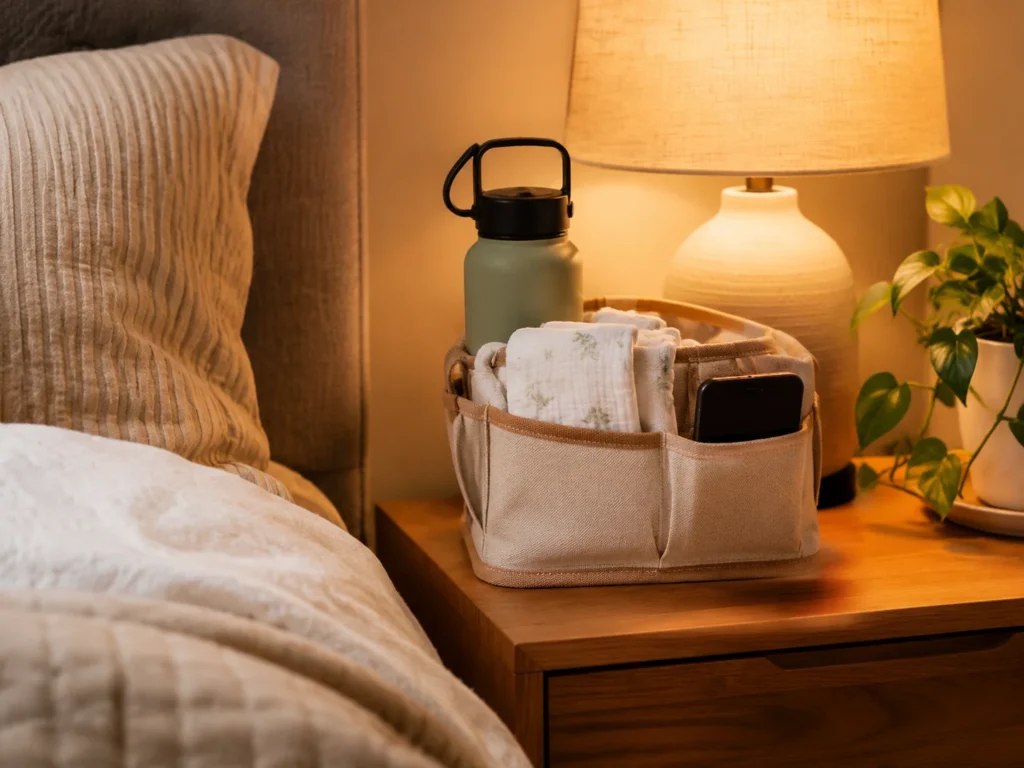
A small caddy on your nightstand holds everything for night feeds: a water bottle, nipple cream or a bottle, a burp cloth, and your phone.
Grace’s Field Note: Pick a caddy with a handle so you can carry it to the nursing chair or living room. Restock it every evening before bed, the same way you’d set out tomorrow’s clothes. It sounds small, but it saves so many sleepy trips across the room.
Skip it if: your nightstand is tiny. A wall-mounted shelf beside the bed may work better.
15. Convertible Mini Crib with a Built-In Drawer
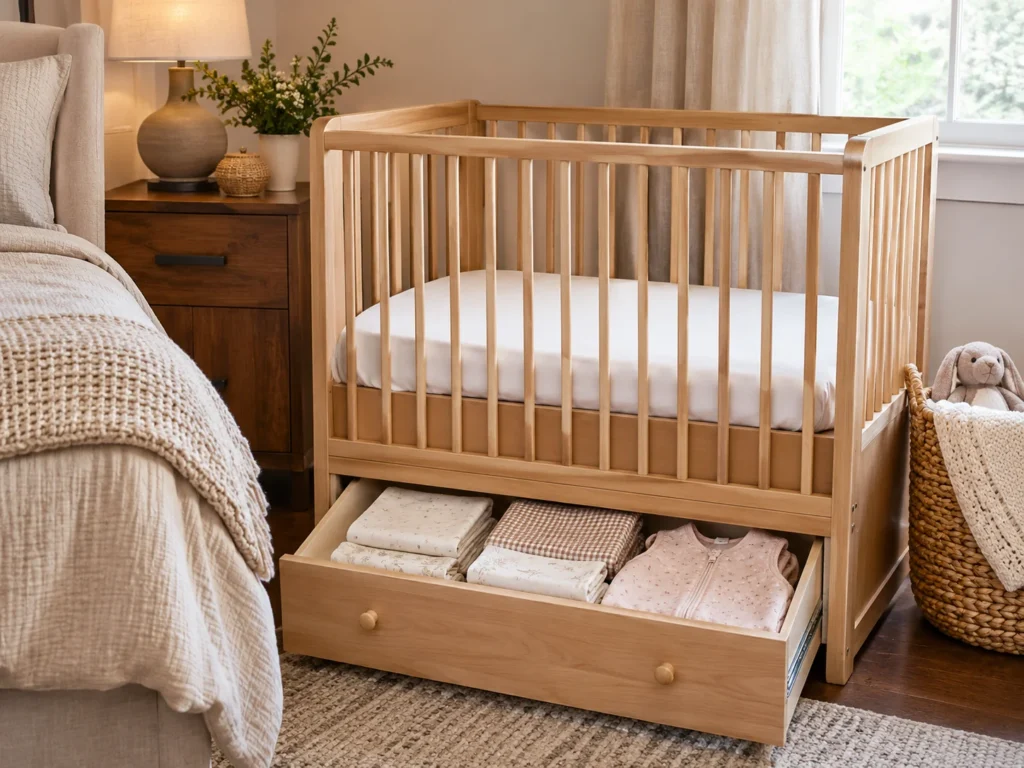
Some mini cribs come with a storage drawer underneath, and many convert into a toddler or twin bed later. That makes them a smart long-term pick for a mini crib in parents room setups.
Grace’s Field Note: Use the drawer for crib sheets and sleep sacks only, so a 2 AM sheet change takes seconds. Always use a mattress made for that crib size, so there are no gaps between the mattress and the sides. Mini crib mattresses are not interchangeable with full-size ones.
Skip it if: you plan to move baby to their own room soon. A bassinet now and a full crib later may be simpler.
16. A Low Amber Night Light Path
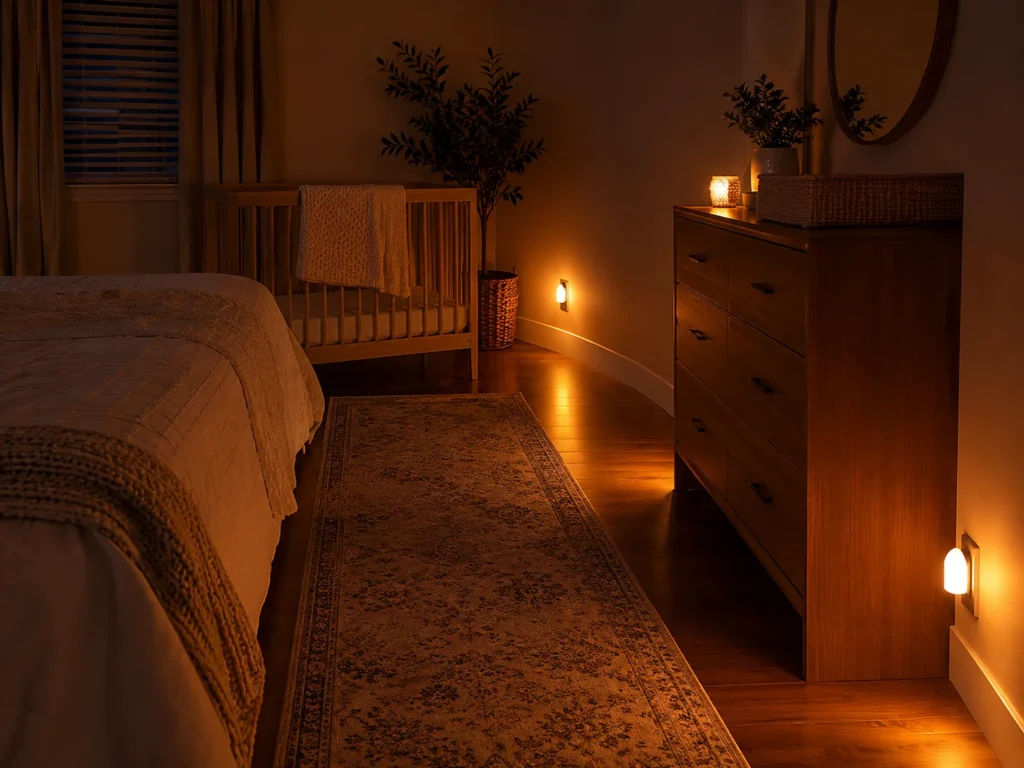
Instead of turning on a lamp, use small plug-in amber night lights at floor level to light your path from the bed to the crib and changing area.
Grace’s Field Note: Choose motion-sensor night lights in warm amber or red, around 2200K or lower. Place them low on the wall so the light hits the floor, not your eyes or baby’s crib. Low, warm light is less likely to wake everyone up fully than bright white light.
Skip it if: your outlets are close to the crib. Keep every plug and cord at least 3 feet away from where baby sleeps.
Smart Measurement, Safety & Lighting Rules
Crib Placement
Keep the crib at least 24 inches from windows, blinds, curtains, and vents. Use cordless window coverings, and never hang shelves, frames, or decor above the crib.
Walkway Space
Leave 24 to 30 inches of clear floor around your bed and between the bed and crib, so you can walk safely while holding baby in the dark.
Crib Sizes
Bassinets are roughly 18 to 20 by 33 to 38 inches. Mini cribs are about 38 by 24 inches. Full-size cribs hold a 52 by 28 inch mattress, with a frame closer to 54 by 30 inches.
Sound Machine
Place it across the room from the crib, not on the rail, and keep the volume low, around the level of a soft shower. Keep its cord out of reach.
Night Lighting
Use warm amber or red light between 2200K and 2700K, placed low and pointed away from beds. Avoid blue and cool white night lights.
Cords & Monitors
Keep baby monitor cords and any electrical cords at least 3 feet from the crib. Mount the monitor on the wall rather than the crib rail.
Common Room-Sharing Mistakes to Avoid
- Decorating inside the crib. Bumpers, pillows, blankets, and plush toys may look sweet in photos, but they don’t belong in the sleep space.
- Crib under a window. Drafts, sunlight, and blind cords all cause problems.
- Diaper supplies on the floor. They become a tripping hazard at 3 AM.
- Bright overhead lights for night feeds. They wake everyone up fully, including you.
- Buying too much. Start with the basics, then add storage once you know what you actually use.
Quick Comparison Table
| Idea | Best Room Size | Crib / Sleeper Type | Key Space-Saving Advantage |
|---|---|---|---|
| Bedside Bassinet + Diaper Cart | Any size | Bassinet | Rolling cart moves where you need it |
| Closet Mini Crib Nook | Small | Mini crib | Uses closet space, frees the main floor |
| Dresser-Top Changing Station | Any size | Any | Replaces a separate changing table |
| Foot-of-the-Bed Zone | Long, narrow rooms | Mini crib | Uses space that usually sits empty |
| Corner Crib + Pegboard | Small to medium | Mini or full crib | Vertical storage with no floor footprint |
| Under-Bed Storage Bins | Any size | Any | Hides backup supplies out of sight |
| Over-the-Door Organizer | Small, rentals | Any | Zero floor space, renter-friendly |
| Convertible Mini Crib + Drawer | Small to medium | Convertible mini crib | Built-in storage and long-term use |
Room sharing is a short season, even when the nights feel long. Start with a safe sleep spot, a clear path, and one organized diaper zone, then add the cozy touches that make the room feel like yours again. A calm bedroom helps everyone rest a little better, and that’s the whole goal.
About Grace: Grace Miller is the small room stylist behind Comfy Home Decors, sharing practical layouts and storage ideas for real-size bedrooms. She focuses on calm, clutter-free spaces that work for real life, including the busy newborn months.